
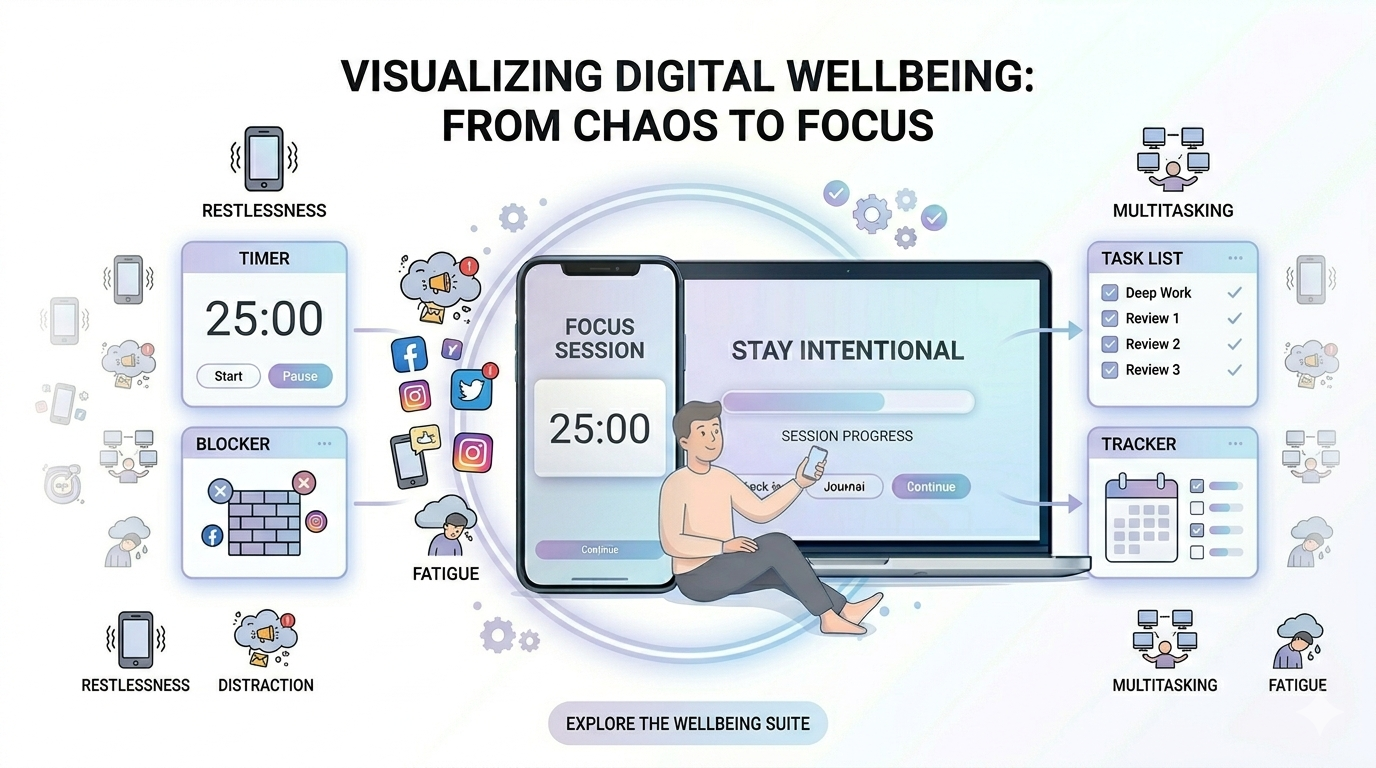
Before you try to “fix” your focus, it’s important to understand one thing: attention problems aren’t random. They follow patterns.
Most people assume they just have “bad focus,” but in reality, your brain breaks concentration at specific moments, and for specific reasons. If you can identify where your attention collapses, solving it becomes much easier.
Let’s break down the most common patterns.
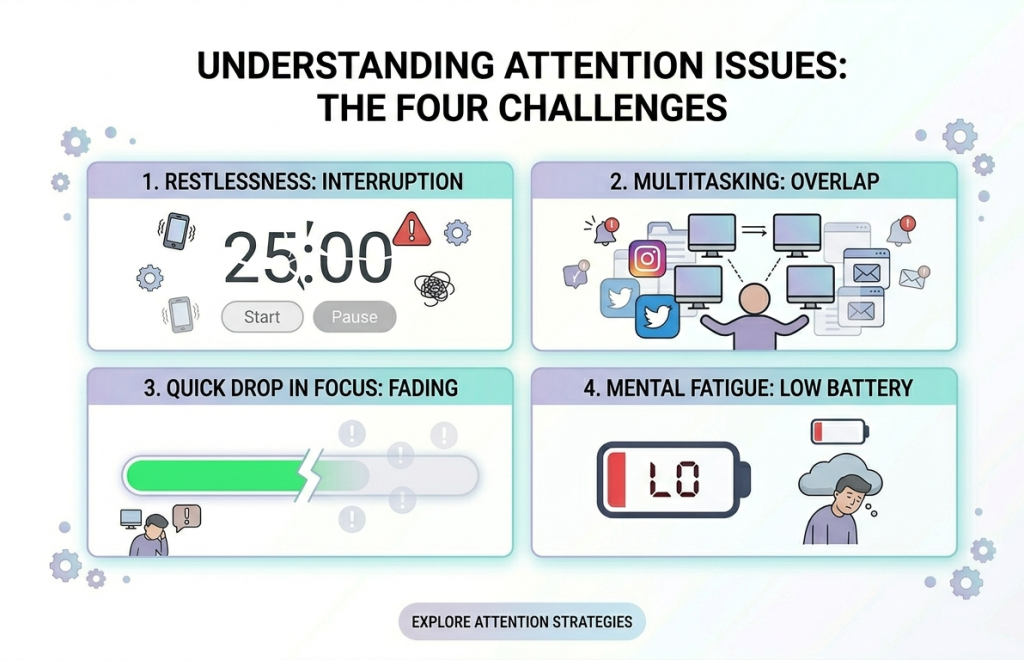
Type 1: You Can’t Sit Still for Even 5 Minutes
You open your laptop with full intention to work, but within minutes, something feels off. There’s a subtle discomfort. You start adjusting your posture, glancing at your phone, opening a new tab “just for a second,” and before you know it, you’ve completely drifted away from the task.
This isn’t about discipline. It’s about how your brain has been conditioned.
Over time, constant exposure to fast-paced content, like scrolling through Instagram or TikTok, has trained your brain to expect stimulation every few seconds. People may also use a reels video downloader to save short-form videos for later reference, content research, or planning instead of repeatedly searching through their feeds. When that stimulation disappears (like when you sit down to work), your brain interprets it as boredom or even discomfort.
So it pushes you to escape.
That’s why even 5 minutes of still, focused work can feel unusually difficult. Your brain isn’t used to “nothing happening.” It wants novelty, movement, and reward.
What this looks like in real life:
- You feel the urge to check your phone repeatedly
- You can’t even read a paragraph without drifting
- You procrastinate not because the task is hard, but because it feels slow
- You constantly look for something “more interesting.”
What’s actually happening:
Your attention span has shrunk to match high-stimulation environments. The moment things slow down, your brain seeks an exit.
Type 2: You Start Strong but Lose Focus Quickly
This is one of the most frustrating patterns. You sit down, start working, and everything feels fine, at first.
You’re focused. You’re making progress. You feel productive.
Then suddenly, 10–15 minutes later, your brain just… drops.
The task starts to feel heavier. You reread the same sentence multiple times. You feel an urge to switch tasks or take a break, even though you just started.
This isn’t a motivation problem. It’s a focus endurance problem.
Your brain is capable of focusing- but only in short bursts. It hasn’t been trained to sustain attention for longer periods.
Why this happens:
- You’re used to quick, short-form content instead of deep work
- Your brain hasn’t built the “stamina” for prolonged concentration
- You rely on initial motivation instead of structured systems
Think of it like going to the gym. You might be able to lift a weight once or twice, but without training, you can’t sustain multiple reps.
What this looks like in real life:
- You start tasks easily, but rarely finish them in one sitting
- You feel “mentally tired” very quickly
- You switch to easier or more enjoyable tasks midway
- You rely on breaks more than actual work time
What’s actually happening:
Your brain is running on short-term focus bursts, not sustained attention. The moment effort increases, it looks for relief.
Type 3: You Keep Switching Between Tasks
You have multiple tabs open. Messages are coming in. You’re juggling tasks, replying to emails, checking updates, and trying to “stay on top of everything.” Tools like Flonnect can help reduce this context switching by turning long explanations into quick step-by-step walkthroughs, tutorials, and async updates, so teams can communicate clearly without breaking focus.
It feels productive.
But at the end of the day, nothing substantial gets done.
This is the trap of task-switching disguised as multitasking.
Your brain isn’t actually doing multiple things at once, it’s rapidly switching between them. And every switch comes with a cost: loss of context, reduced efficiency, and mental fatigue.
Why this happens:
- You don’t have a clear priority for what matters most
- You’re reacting to inputs instead of following a plan
- You’re chasing the “feeling” of productivity instead of actual output
Each time you switch tasks, your brain needs time to reorient. That tiny delay adds up, draining your mental energy.
What this looks like in real life:
- You constantly jump between tabs, apps, or tasks
- You start multiple things, but finish very few
- You feel busy all day, but unaccomplished at the end
- You get easily distracted by notifications or new ideas
What’s actually happening:
Your brain is stuck in a loop of reactive behavior. Instead of focusing deeply, it’s scanning for the next thing to respond to.
Type 4: You Feel Mentally Exhausted All the Time
This one is deeper.
You sit down to work, and you already feel tired. Not physically, but mentally. Even simple tasks feel overwhelming. You struggle to think clearly, make decisions, or stay engaged.
This often gets labeled as burnout, but in many cases, it’s actually cognitive overload.
Your brain has been processing too much information for too long, without enough recovery.
Why this happens:
- Constant exposure to information (news, social media, messages)
- Too many decisions throughout the day
- Lack of mental breaks or downtime
- Carrying too many unresolved tasks in your head
Your brain is like a browser with 50 tabs open. Even if you’re not actively using them, they’re still consuming resources.
What this looks like in real life:
- You feel drained before even starting work
- You avoid tasks because they feel overwhelming
- You struggle with simple decisions
- You feel “foggy” or unfocused throughout the day
What’s actually happening:
Your mental bandwidth is maxed out. It’s not that you can’t focus; it’s that your brain doesn’t have the capacity left to do it effectively.
Why Your Brain Is Struggling to Focus
Your attention span didn’t just disappear; it adapted to your environment.
Apps like Instagram and TikTok train your brain to expect instant rewards. Every scroll gives you novelty, which makes slow, meaningful work feel boring by comparison.
Lack of structured work habits
Without clear systems, your brain relies on willpower. And willpower is unreliable. Structure reduces decision-making, which preserves mental energy.
Too many inputs, not enough clarity
Notifications, emails, messages, tabs, your brain is constantly processing information. But without direction, all that input turns into noise.
Your brain is adapting to distraction
The more you switch tasks, the better your brain becomes at switching and the worse it becomes at focusing. Attention is like a muscle: it strengthens or weakens based on how you use it.
The Fix: Match the Right App to Your Problem
Here’s where most people go wrong: they download random productivity apps and expect miracles.
But focus isn’t fixed by tools alone; it’s trained through the right tools for your specific problem.
Let’s match each attention issue with a targeted solution.
If You Can’t Sit Still for 5 Minutes
What’s happening in your brain
Your brain has become addicted to stimulation. Silence and stillness feel uncomfortable, so it pushes you to seek distraction.
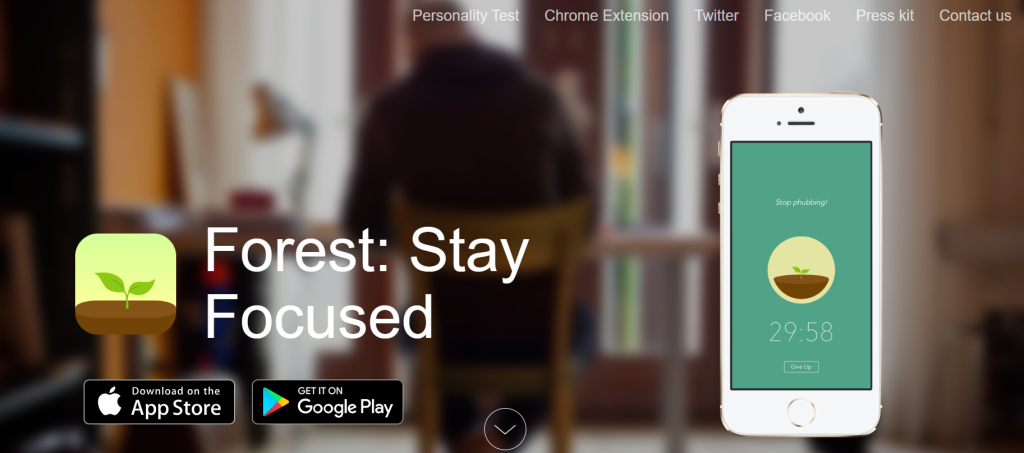
App to fix it: Forest
Forest uses a simple but powerful idea: you plant a virtual tree when you start focusing. If you leave the app, the tree dies.
This creates a psychological commitment. Instead of forcing yourself to focus for hours, you start small, 5, 10, or 15 minutes.
Why it works:
- Builds tolerance for stillness
- Gamifies focus, making it rewarding
- Encourages consistency over intensity
Over time, your brain relearns that it’s okay to sit with one task without constant stimulation.
If You Lose Focus Quickly After Starting
Why your attention drops fast
Your brain isn’t trained for sustained effort. It’s used for quick bursts of activity followed by distraction.
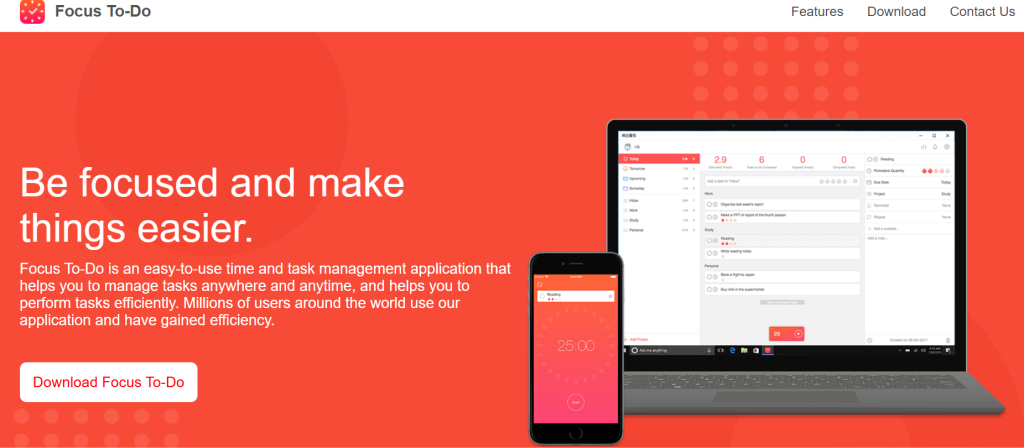
App to fix it: Focus To-Do
This app is based on the Pomodoro Technique, working in short, timed intervals (usually 25 minutes), followed by breaks.
Instead of forcing long focus sessions, you gradually build endurance.
Why it works:
- Breaks work into manageable chunks
- Reduces overwhelm
- Trains your brain to stay engaged longer over time
Think of it as “interval training” for your attention span.
If You Constantly Switch Between Tasks
The myth of multitasking
Multitasking isn’t real. What you’re actually doing is rapid task-switching, and every switch comes with a cognitive cost.
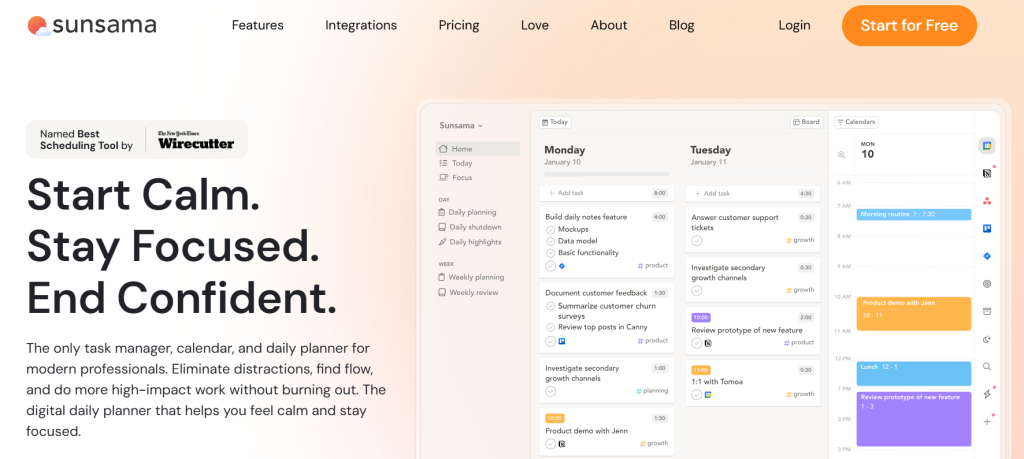
App to fix it: Sunsama
Sunsama forces you to plan your day intentionally. Instead of juggling everything, you choose what matters today.
It helps you commit to one task at a time.
Why it works:
- Reduces decision fatigue
- Encourages single-tasking
- Creates a clear daily focus
When your brain knows exactly what to do next, it stops searching for distractions.
If You Feel Overstimulated and Distracted
Why your brain is overloaded
You’re not just distracted, you’re overstimulated. Too many inputs have pushed your brain into a reactive state.
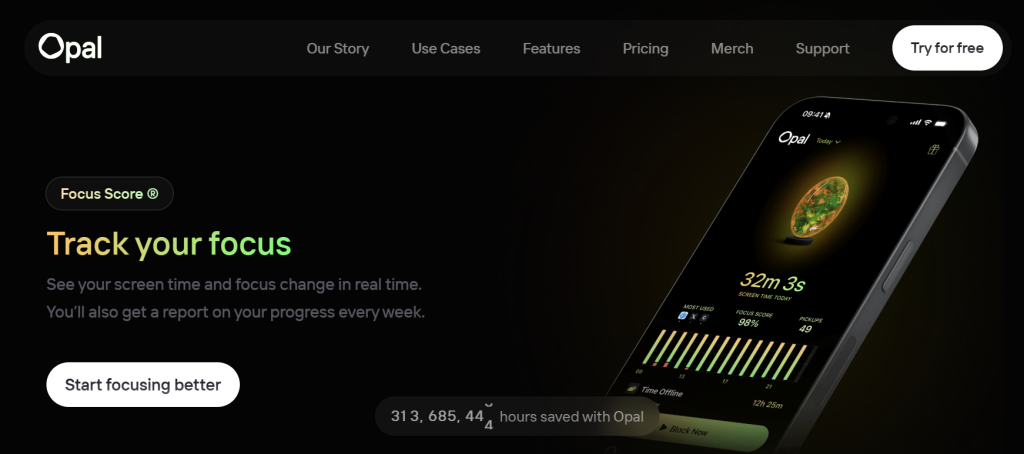
App to fix it: Opal
Opal blocks access to high-distraction apps during focus sessions. It creates boundaries between you and your biggest time-wasters.
Why it works:
- Removes temptation instead of relying on willpower
- Creates controlled usage windows
- Helps reset your dopamine baseline
Sometimes, the best way to focus is to eliminate the option not to focus.
If Your Environment Breaks Your Focus
Why surroundings affect concentration
Your brain responds to sensory input. Noise, chaos, and unpredictability make it harder to concentrate.
App to fix it: Endel
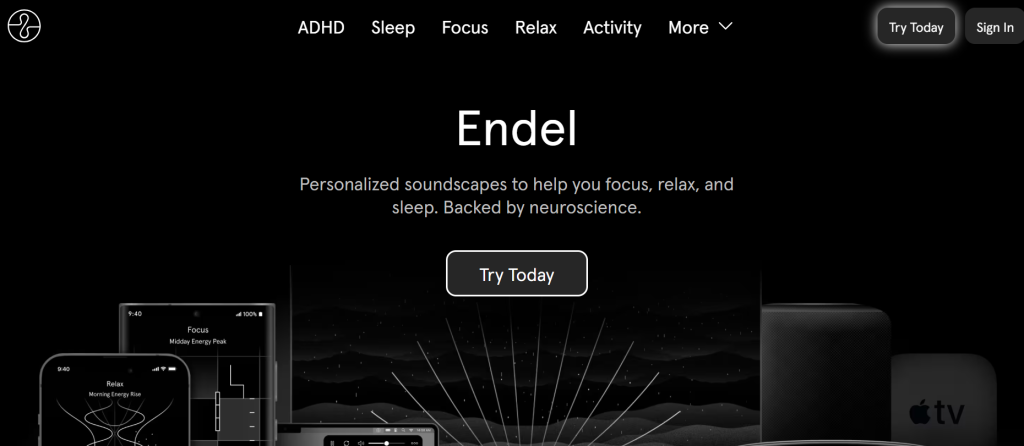
Endel generates personalized sound environments designed to improve focus and relaxation.
Unlike random music, it adapts in real time based on your activity and environment.
Why it works:
- Reduces external distractions
- Creates a consistent mental state
- Signals your brain that it’s time to focus
Your environment shapes your attention more than you think.
If Your Mind Feels Cluttered
Too many thoughts = less focus
When your brain is full of unfinished tasks and ideas, it struggles to concentrate on anything.
App to fix it: Notion
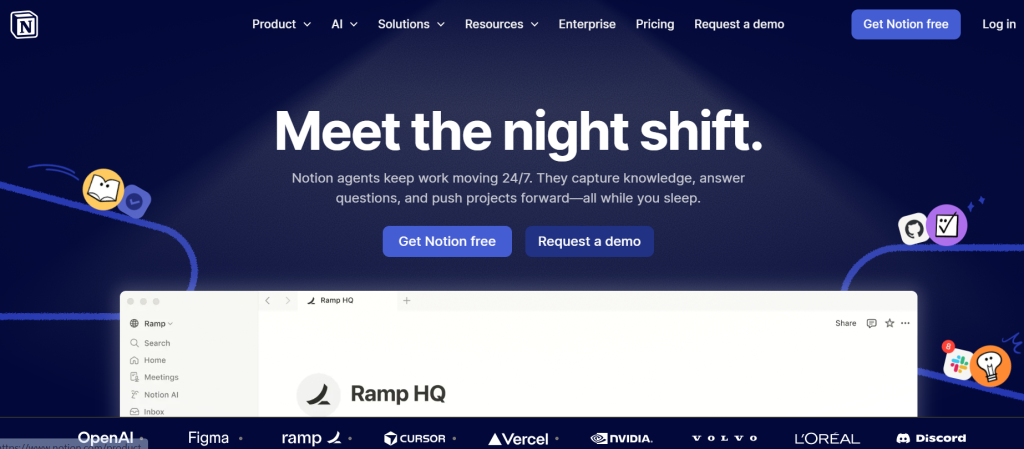
Notion acts as an external brain. You can store tasks, notes, ideas, and plans in one place. Having a clear system for organizing creative work, from project notes to logo design ideas, can also help reduce mental clutter.
Why it works:
- Clears mental clutter
- Organizes information logically
- Reduces the need to “remember everything.”
When your mind is clear, your attention naturally improves.
If You Don’t Know Where Your Time Goes
Lack of awareness = repeated distractions
You can’t fix what you don’t measure. Most people underestimate how much time they lose to distractions.
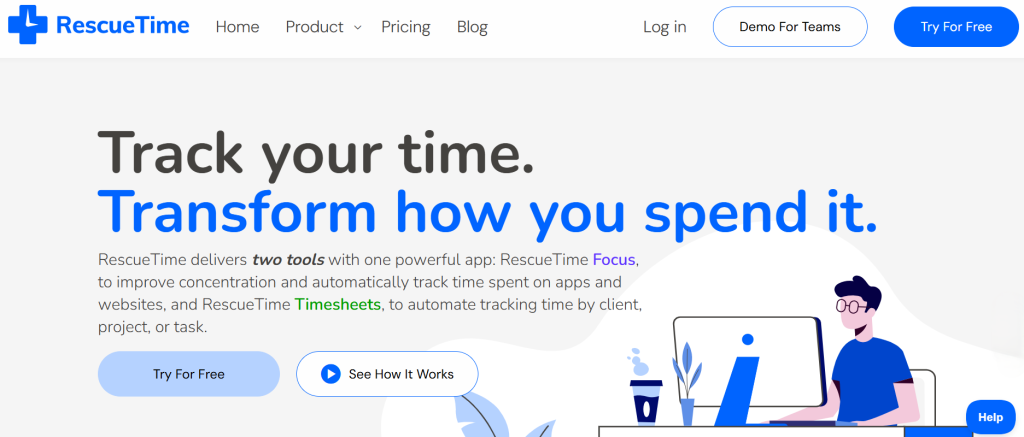
App to fix it: RescueTime
RescueTime runs in the background and tracks how you spend your time on devices.
It gives you honest insights into your habits.
Why it works:
- Creates awareness of time usage
- Identifies hidden distractions
- Helps you make data-driven improvements
Awareness is the first step toward control.
Build Your Personal Focus System (Simple Formula)
You don’t need 10 different tools. In fact, too many apps can create more distractions.
Keep it simple:
- 1 app to block distractions (like Opal)
- 1 app to build focus sessions (like Forest or Focus To-Do)
- 1 app to track progress (like RescueTime)
That’s it.
The goal isn’t to optimize everything—it’s to stay consistent.
What Happens When You Fix Your Attention Span
When you train your focus the right way, the results go beyond productivity.
You finish tasks faster
Deep focus allows you to complete work in less time, with better quality.
You feel less mentally drained
Constant switching is exhausting. Sustained attention is actually less tiring.
You regain control over your time
Instead of reacting to distractions, you start directing your day with intention.
Conclusion: Stop Forcing Focus, Start Training It
Your attention span isn’t broken; it’s trained incorrectly.
And just like any skill, it can be rebuilt.
- Your brain is adaptable
- The right tools make the process easier
- You don’t need to fix everything at once
Start small. Identify your biggest focus problem, pick one app, and build from there.
Because focus isn’t about working harder, it’s about working with your brain instead of against it.