Nearly four in ten kids now have their own iPad before their second birthday, according to Common Sense Media’s 2025 census. So when people joke about “iPad kids,” they’re not describing a rare situation. They’re describing something that’s quietly become the default.
The term gets thrown around as an insult, a meme, a shorthand for a kid who’s glued to a screen. But underneath the joke is a real, useful pattern worth understanding, especially if you’ve caught yourself handing over the tablet just to get through the next twenty minutes. This article covers where the phrase actually comes from, why tablets work so well on a young nervous system, how to tell normal screen habits from something worth addressing, and what actually helps, without turning your house into a surveillance operation.
Where the term “iPad kid” actually comes from
“iPad kid” didn’t start as parenting advice. It started as an insult, and a fairly pointed one. Gen Z coined it to describe younger Gen Alpha children (kids born roughly 2010 onward) who seemed permanently attached to a tablet. Videos mocking the behavior went viral on TikTok in 2023, and the phrase has stuck around ever since.
It’s worth noting the term isn’t really about Apple’s product. “iPad kid” gets used for any device: phones, Chromebooks, gaming handhelds. The label is really about a pattern of behavior, not a specific piece of hardware. It’s a close cousin of another slang term worth knowing, being chronically online, which describes the adult version of the same permanently-plugged-in state.
Here’s a detail that surprises a lot of parents. That “wow, so quiet at the restaurant” moment people treat as a small parenting win? That’s often the first sign, not a good one. Quiet isn’t always calm. Sometimes it’s just a very effective off-switch for a kid’s attention, and off-switches don’t teach a kid anything about handling the discomfort underneath.

Why tablets are so effective at calming kids down
This is the part most explanations skip. It’s not that kids are lazy or that parents are failing. Tablets work because they’re extremely good at doing one specific job: resolving discomfort instantly.
A bored, overstimulated, or frustrated kid is dealing with a feeling they don’t yet have great tools for. A tablet interrupts that feeling immediately, with fast cuts, bright colors, and constant response to touch. No effort required. Compare that to the alternative, which is sitting with boredom until a kid’s brain figures out what to do with it. One option is instant. The other takes a while and usually looks like whining first.
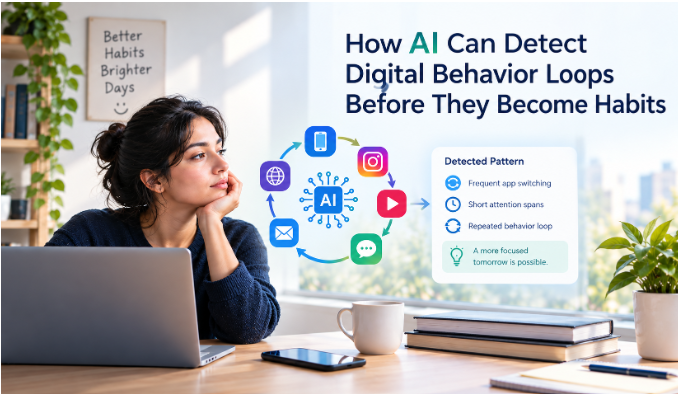
Adults do a version of this too. It’s the same basic loop behind reaching for your phone the second a meeting goes quiet, or scrolling the moment a task gets boring. Some call it the Comfort Loop: a small, ordinary discomfort quietly getting resolved by a screen instead of sat with for even a minute. Kids just have far less capacity to resist it. Their prefrontal cortex, the part of the brain that handles impulse control and delayed gratification, is nowhere near finished developing. So when a screen shows up, there’s very little internal brake to slow things down. It’s the same reason a dopamine reset can feel necessary for an adult after a heavy scrolling session, just with more developed brakes to pump.
None of this makes reaching for a tablet during a meltdown a parenting failure. It works, in the moment. That’s exactly the problem. Research cited by the American Psychological Association has connected heavier screen engagement in kids with higher rates of anxiety, depression, aggression, and hyperactivity. The thing that resolves the moment can also be feeding the pattern that makes future moments harder.
Signs your kid might actually be an “iPad kid”
Most kids like screens. That’s not the tell. Nearly every parent already knows their child would choose a tablet over almost anything else, given the option. The real signal is what happens when the screen goes away.
A few patterns worth paying attention to:
- Meltdowns specifically tied to the device being taken away. Not mild disappointment. Real dysregulation, tears, yelling, the kind that takes a while to come down from.
- Reluctance to do anything screen-free, even activities they used to genuinely enjoy.
- Trouble self-entertaining for even a few minutes without reaching for a device first.
- A noticeable shift in mood after screen time ends. Grumpier, more irritable, harder to redirect than before the screen came out.
If none of that sounds familiar, your kid probably just likes their iPad the normal amount. If a few of these ring a bell, it doesn’t mean something’s broken. It means there’s a pattern worth adjusting before it hardens further.

How much screen time is actually normal
The American Academy of Pediatrics has clear age-based guidance:
- Under 18 months: avoid screens except video chatting with family.
- Ages 2-5: about one hour a day or less.
- Age 5 and up: more flexible, with a focus on quality over quantity and prioritizing sleep, play, and family time.
Here’s the gap between guidance and reality: plenty of toddlers are already logging 60 to 90 minutes a day, mostly passive viewing, well above what’s recommended for their age. But raw minutes aren’t the whole story. A kid who’s a little over the recommended amount but transitions off the screen without much drama is in a very different spot than a kid within the guidelines who falls apart every single time it ends. Pattern matters more than the number on the clock.
Why this happens (and it’s not just about willpower)
Parents aren’t the villain of this story. The Surgeon General’s 2024 advisory on parental stress found that 41 percent of parents and caregivers feel too overwhelmed to function most days. Screens have become a coping tool for an exhausted generation of caregivers, not just their kids.
And the habit runs both directions. A study on children’s short-video use found that when parents were heavy users of short-form video themselves, the negative effect on their kids’ attention got noticeably worse. When parents kept their own use lower, the effect on their kids was much smaller. Kids don’t just watch what’s on the screen. They watch what their parents do around screens.
This is usually the missing piece. Most parents already suspect the iPad isn’t ideal. What’s actually missing isn’t awareness; it’s a workable alternative for the exact five minutes they need quiet and don’t have one. Working on your own phone habits, the same environment-first, awareness-based approach, tends to move the needle here more than any rule aimed only at your kid, and it’s a lot closer to improving your own mental focus than it is to policing a child.
What actually helps
A few things that hold up better than an outright ban:
- Don’t start with zero: Hard, sudden bans tend to backfire. Kids find a way around them or get secretive about device use, which makes them less likely to come to you if something online goes wrong later.
- Build in serve-and-return moments: Harvard’s Center on the Developing Child has documented responsive back-and-forth, like eye contact, or actually responding when your kid points at something or babbles, as one of the most effective things a caregiver can offer a developing brain. It’s simple. It’s also the thing screens can’t replicate.
- Set the boundary around the transition, not just the total: A five-minute warning before the screen goes off does more to prevent a meltdown than shaving ten minutes off the total time ever will.
- Model it yourself: Put your own phone face-down during the exact windows you want your kid off their tablet. Kids notice the double standard faster than most parents expect, the same way staying disciplined without relying on willpower usually comes down to changing the environment rather than trying harder in the moment.
None of this is as fast or as satisfying as an app that locks the tablet at 6 p.m. sharp. It is the version that changes the underlying pattern instead of just hiding it for an hour.

Common mistakes parents make trying to fix it
A few traps worth avoiding:
Going from unlimited screen time to zero overnight almost guarantees the exact meltdown you were trying to prevent. Treating this as a discipline problem instead of a missing-coping-skill problem doesn’t help either. A kid who falls apart when the iPad turns off often just doesn’t have another tool yet for that specific moment of discomfort. And restricting a kid’s screen time while ignoring your own tends to undercut everything else you try.
The pattern isn’t permanent
“iPad kid” describes a stage, not a life sentence. It responds well to small, consistent changes: less abrupt transitions, more serve-and-return moments, and a parent who’s paying attention to their own screen habits, not just their kid’s. That last part is worth taking seriously on its own. The awareness that helps a kid put down a tablet is the same awareness that helps an adult put down a phone, which is the whole idea behind ComfortZoneCheckin.
FAQ
It’s not a clinical diagnosis. It’s slang that describes a real, observable pattern: heavy tablet reliance paired with difficulty self-regulating when the screen isn’t available.
It tends to show up earliest in toddlers and preschoolers, often once a tablet becomes the default answer to boredom, restaurant waits, or meltdowns, sometime between ages two and five.
Yes. Early childhood brains are highly adaptable. Consistent, smaller changes (gentler transitions, more unstructured play, a parent modeling their own screen habits) tend to shift the pattern within weeks, not years.
Usually not all at once. Sudden, total bans tend to trigger the meltdown pattern parents are trying to avoid and can push older kids toward secretive device use. A gradual reduction with clear transition warnings works better for most families.