You’ve probably said “two hours” before. Maybe you set a Screen Time limit on their phone and watched it get negotiated around within a week. You’re not alone in this, and you’re not failing. The gap between the rule and what actually happens at home is almost universal.
Children aged 11 to 14 average nine hours of daily screen time, per CDC data, more than any other age group, including older teenagers. For tweens 8 to 12, Common Sense Media puts the number at five and a half hours of recreational screen media daily, before homework.
So before we answer how much screen time a 12-year-old should have, there’s a more useful question underneath it: why is the number everyone cites so hard to implement? That’s what this article is about.
Quick Takeaways
- The commonly cited guideline is 1-2 hours of recreational screen time per day, but the AAP officially moved away from rigid time limits back in 2016.
- Most tweens exceed the recommendation by 200–300%. This isn’t a parenting failure. It’s a structural problem.
- Active screen time (creating, connecting, learning) is meaningfully different from passive screen time (scrolling, autoplay). The type matters as much as the hours.
- Sleep is the non-negotiable. No screens within one hour of bedtime; ideally, none in the bedroom.
- A family media plan built with your kid beats a top-down number every time.
- At 12, the goal is self-regulation. Not compliant.
What the Guidelines Actually Say (And What They Don’t)
Here’s the part most articles skip: the “two hours” rule parents have internalized was based on older guidance that the AAP itself has since revised.
In 2016, the American Academy of Pediatrics explicitly acknowledged that there isn’t enough evidence demonstrating a benefit from specific screen time limitation guidelines. They replaced the clock-based rule with the 5 Cs framework: considering the child (temperament, individual needs), the content (what exactly they’re watching), the context (when and where), whether screens are being used to manage calm (stress self-soothing, anyone?), and communication (is the family actually talking about it?).
That said, practical guidance hasn’t disappeared. The American Academy of Child and Adolescent Psychiatry, the Mayo Clinic, and most pediatricians still recommend keeping recreational screen time, entertainment-only use, separate from homework, to 1 to 2 hours per day for this age group. That’s still a reasonable ceiling. It’s just not a self-enforcing one.
The honest bottom line: 1-2 hours of recreational screen time is a useful benchmark. Treating it as a hard rule misses the more important questions: what kind, toward what purpose, with what awareness?
What’s Actually Happening at Age 12
The numbers tell a consistent story. Tweens 8 to 12 average over five and a half hours of daily recreational screen media. For the 11-to-14 bracket, that climbs to nine hours. That’s a full school day, on screens, every day, outside school.
Post-pandemic data makes it sharper. Research found that 12- to 13-year-olds were averaging 7.7 hours of non-school screen time per day, roughly double their pre-pandemic baseline of 3.8 hours. That doubling largely held after restrictions lifted.
The gap between recommendations and reality ranges from 200 to 300 percent for this age group. If that feels daunting, it’s not primarily a willpower problem. Teams of behavioral scientists designed the devices in your kid’s hands to maximize attention. That context matters for what kinds of solutions can actually work.
Why 12 Is Different From 10 (Or 14)
Age 12 sits at an inflection point most screen time articles treat as unremarkable. It isn’t.
Developmentally, early adolescence is when identity formation accelerates, peer belonging becomes a primary motivator, and much of it happens through screens. Group chats, gaming with friends, social media: for a 12-year-old, these aren’t just entertainment. That’s where social life happens. Restricting screens at this age isn’t just about device time; it can feel, to the child, like being cut off from their friends.
At the same time, parental authority starts to be negotiated rather than assumed. A rule accepted without question at nine produces genuine arguments at twelve. The child didn’t become defiant; they became an adolescent. The rule just didn’t keep up.
Researchers are increasingly focused on the pre-12 window specifically. A University of Pennsylvania researcher changed his approach to his own children’s phone access mid-study, after early data suggested that receiving a phone before 12 was associated with measurably worse mental health outcomes. The tween years aren’t a waiting room before the “real” adolescent risks show up. They’re where habits get set.
What Too Much Screen Time Actually Does
Sleep – the non-negotiable
The AAP recommends 9 to 11 hours of sleep per night for children ages 6 to 13. Screen time is the single biggest threat to hitting that target.
A 2025 study in JAMA Pediatrics from the University of Pittsburgh found that heavy screen use in early adolescents was linked to shorter sleep and disrupted brain white matter organization, the neural connections that function as highways between brain regions. Blue light delaying melatonin is part of it. But the bigger factor is stimulation itself: notifications, autoplay, the social feedback loop of likes and replies. These keep the brain alert long after the screen is supposedly “done.” If this is already affecting you too, our post on whether too much screen time causes headaches breaks down the physical mechanism in more detail.
The practical implication is concrete: screens within one hour of bedtime carry the highest risk. Screens in the bedroom compound it. Of all the rules in the screen time conversation, this one has the strongest evidence behind it.
Mental health and attention
The Adolescent Brain Cognitive Development (ABCD) Study, 9,538 participants, followed over two years, found that higher baseline screen time predicted both internalizing problems (anxiety, depression) and externalizing problems (aggression, inattention). A 2025 NIH review of 46 studies found consistent links between high screen use and attention difficulties and emotional regulation challenges. Research published in Translational Psychiatry in late 2025 found associations between screen time and ADHD symptom severity.
One caveat: association isn’t causation. Kids who are anxious or inattentive may seek out screens for exactly that reason. But the direction of the research is consistent enough to take seriously, and the practical advice is the same either way.
“Impatience in real-world interactions is one of the biggest results of excessive screen time,” said Dr. Samina Yousuf, a pediatrician with OSF HealthCare. “You don’t have to be patient with a screen. It’s instant gratification. But you do need patience when you’re talking to someone in person.”
A 12-year-old is still figuring out what relationships actually feel like: how long they take, how reciprocal they are, how much discomfort they involve. The habits being built now are practice, for everything that follows.
Not All Screen Time Is Equal
The most useful reframe in the whole screen time debate is also the least implemented. Not all of it is the same.
Active screen time involves real engagement: video-chatting with a relative, coding, editing a video, writing, playing a game that requires strategy and communication with others. Research suggests this kind of use is meaningfully different in its effects, often beneficial.
Passive screen time is the drift state. Scrolling without purpose, autoplay video, social media feeds, idle gaming that isn’t mentally taxing. The negative health associations in the research are concentrated here.
Here’s what passive drift looks like at 12: a kid opens YouTube to watch one specific video. Forty-five minutes later, autoplay has taken them through six tangentially related ones. They weren’t watching; they were drifting. Intentional use tipped quietly into passive consumption, without a clear moment of decision.
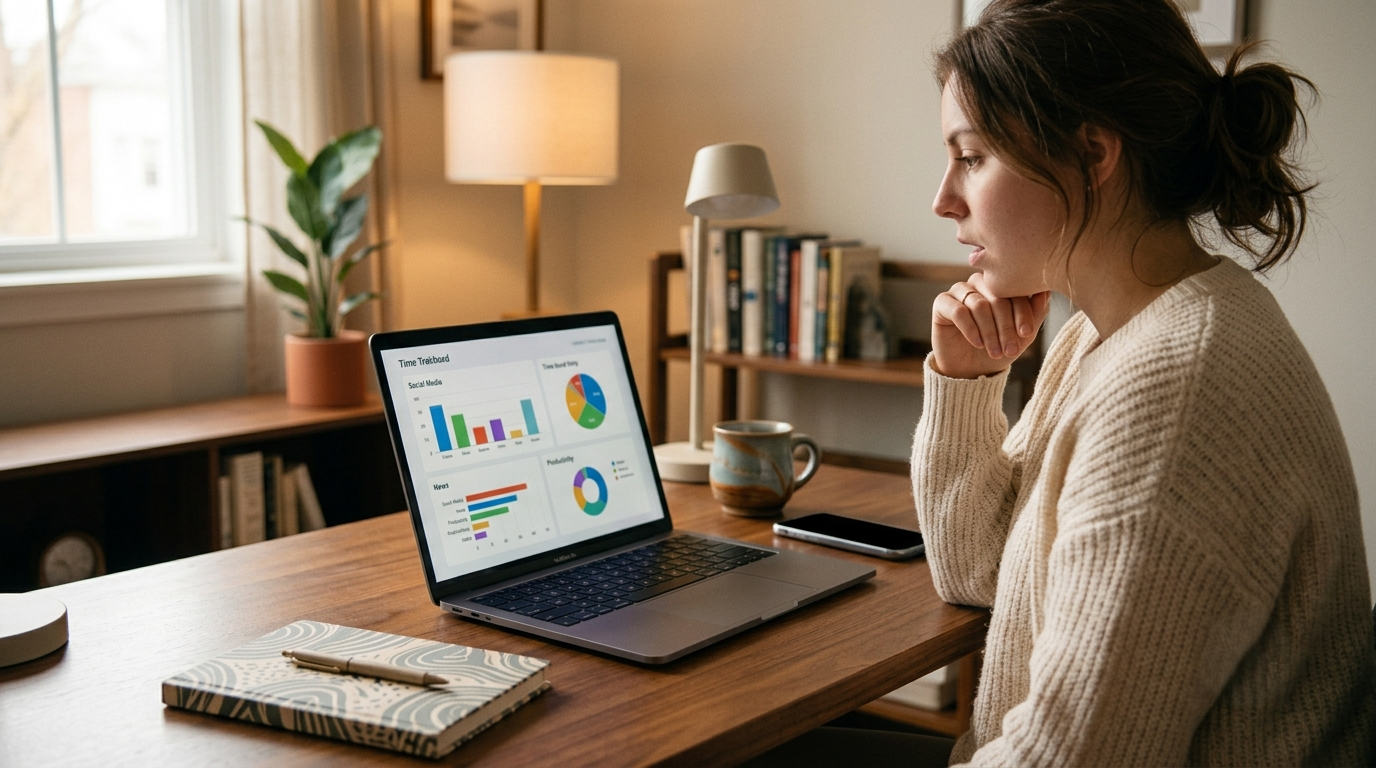
That pattern — where active engagement slides into passive dwell- is something most parents recognize but rarely name. Naming it changes the conversation. “Are you choosing this, or are you drifting?” is a question a 12-year-old can engage with seriously. It’s also a dynamic that plays out just as predictably in adult digital behavior — which is exactly what we cover in Why time tracking alone doesn’t fix distraction.
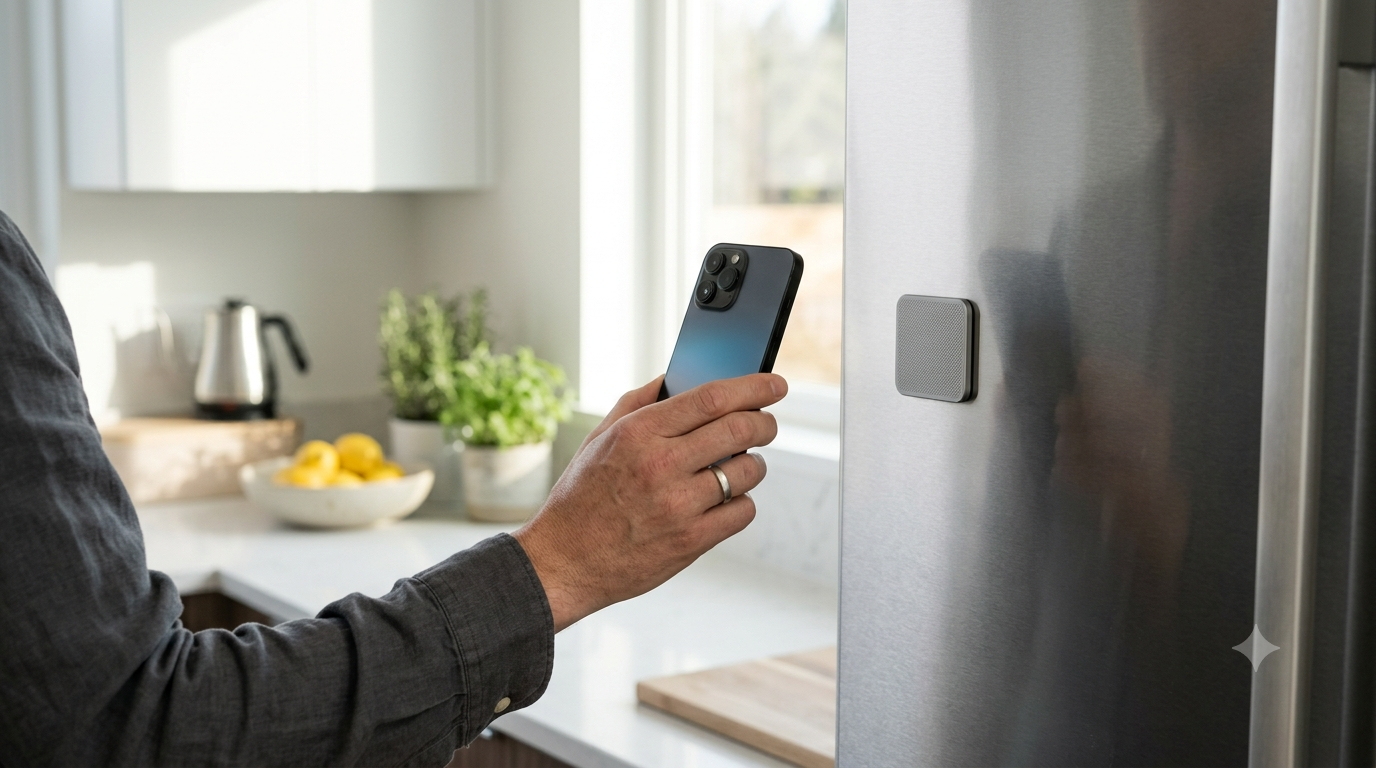
At ComfortZoneCheckin, this passive drift dynamic is exactly what the tool is built to interrupt: check-ins that fire at the moment of drift, not a timer that shows up after the hour is already gone. See how it works here.
Why Limits Alone Don’t Stick
Hard cutoffs work until they don’t. A determined 12-year-old finds workarounds, a different device, a friend’s phone, a parent who relaxes the rule under social pressure. Even if enforced consistently, a hard limit creates an adversarial frame. The limit becomes the enemy, and the goal becomes getting to the other side of it.
What behavioral research actually supports is friction and awareness at the moment of drift, not a timer that fires after the damage is done. You can’t interrupt a habit loop from the outside. The person inside the loop has to notice they’re in one.
That’s as true at 12 as it is at 35. The Procrastination Loop and Inspiration Loop, where someone starts with intentional purpose and slides into passive consumption, don’t discriminate by age. They run on the same mechanism: familiar comfort, low demand, a feedback system that rewards continued engagement.
Building awareness of that drift pattern is what makes digital habits sustainable. It’s a harder conversation than “your limit is two hours.” But it’s also one you don’t have to repeat every day.
A Realistic Framework for Parents
1. Start with a family media plan, not a number. The AAP offers a free Family Media Plan at healthychildren.org, built collaboratively, with your child involved. Rules a 12-year-old helped create are rules they’re less motivated to undermine.
2. Protect sleep first. No screens in the bedroom after a set time. This single rule has the best evidence behind it and is the hardest to argue with on its merits. Sleep is foundational to school performance, mood, and physical health. “Screens off at 9 because sleep matters” is a different conversation than “because too much screen time is bad.”
3. Name the active/passive distinction. Talk about what kind of screen use is happening, not just the hours. Ask what they’re doing. Curiosity as the opener beats enforcement.
4. Introduce friction, not hard cutoffs. Mealtime as screen-free. A “one episode then decide” rule instead of autoplay. A brief daily check-in about what they used screens for. These create moments of choice where passive drift would otherwise go unnoticed.
5. Model what you’re asking for. Twelve-year-olds are watching how adults handle their own devices. If the household norm is phones at dinner and screens in the bedroom, that’s what’s being modeled. The most effective screen time rule you can set is the one you follow yourself.
The goal isn’t a screen-time police state. It’s a household where a 12-year-old is actively learning to self-regulate, the skill that matters at 16, at 22, at 35.
Putting It Together
The answer to “how much screen time should a 12-year-old have” is not just a number, but that doesn’t mean the number is useless. Use the 1–2-hour recreational guideline as a rough ceiling for entertainment-only use. Use it as the start of a conversation, not the whole conversation.
The questions that matter more: Is sleep protected? Is the screen use mostly active or passive? Does your child know the difference? Do they have the language to notice when they’re drifting?
A 12-year-old who can answer those questions is better equipped for the harder digital environment of their late teens than one who just knows how to pause a timer.
If you want to model awareness-first habits in your own digital life and show your kid what that actually looks like, ComfortZoneCheckin is built around that principle. Check-in over restriction. At any age, that’s where lasting change starts.
Frequently Asked Questions
The most widely cited guideline is 1–2 hours of recreational screen time per day, supported by the American Academy of Child and Adolescent Psychiatry, the Mayo Clinic, and the WHO. The AAP updated its position in 2016 to emphasize quality over quantity, so what they’re doing matters alongside how long. Protect sleep and physical activity first; recreational screen time fits around those.
Homework, online learning, and school video calls are separate from recreational screen time guidelines. The 1–2 hour ceiling applies to entertainment and leisure specifically; that’s where passive drift and its associated risks concentrate. Track recreational use; don’t penalize necessary educational screen time.
The AAP recommends no social media before 13, and most platforms (Instagram, TikTok, Snapchat) have a 13+ age requirement. Age 12 sits right at that threshold. If your child is already using it, apply the active/passive lens: genuine connection, group chats with friends, interest-based communities- differs meaningfully from passive feed scrolling.
Watch for difficulty stopping when asked, irritability when devices are taken away, declining school performance, disrupted sleep, withdrawal from in-person activities, and screens consistently pushing out physical activity or family time. These behavioral signals are more diagnostic than any hour count.
Involve your child in building the rules; collaborative guidelines get more buy-in than top-down mandates. Make the rationale concrete (sleep, focus, social time, not “screens are bad”). Protect sleep as the non-negotiable anchor. Replace hard cutoffs with awareness-building friction where you can. The goal is your child’s self-regulation. Not your enforcement stamina.