
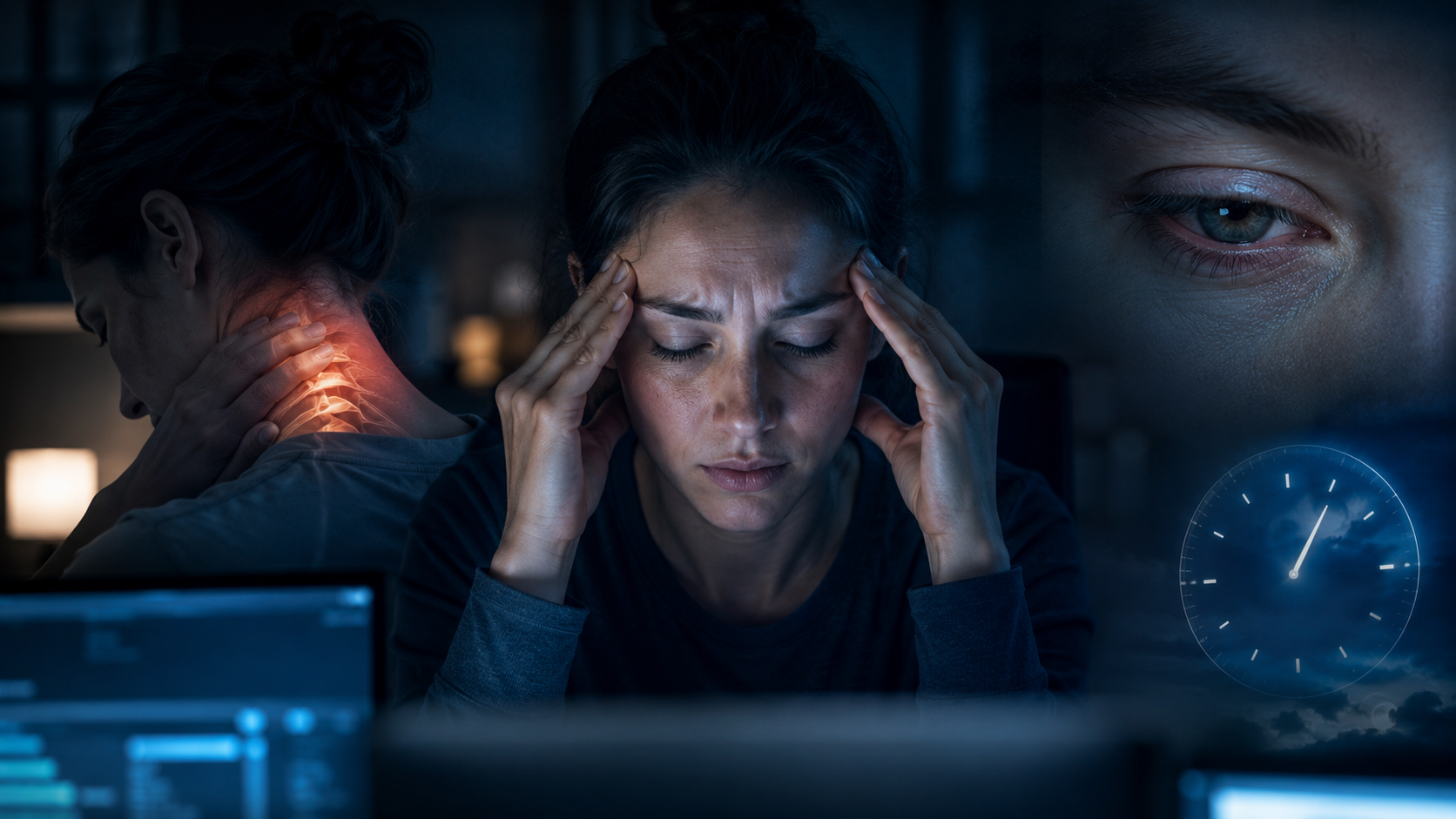
It’s 5 PM. You’ve been at your desk since 9. The inbox is clear, the last meeting is done, and right on cue, a dull, pressing ache builds behind your eyes and across your temples.
Most people chalk it up to “too much screen time,” take some ibuprofen, and move on, which is fair. But screens trigger headaches through at least three different pathways, and knowing which one is affecting you changes what actually helps.
Quick Takeaways
- Yes, screens can cause headaches; digital eye strain affects up to 69% of people globally.
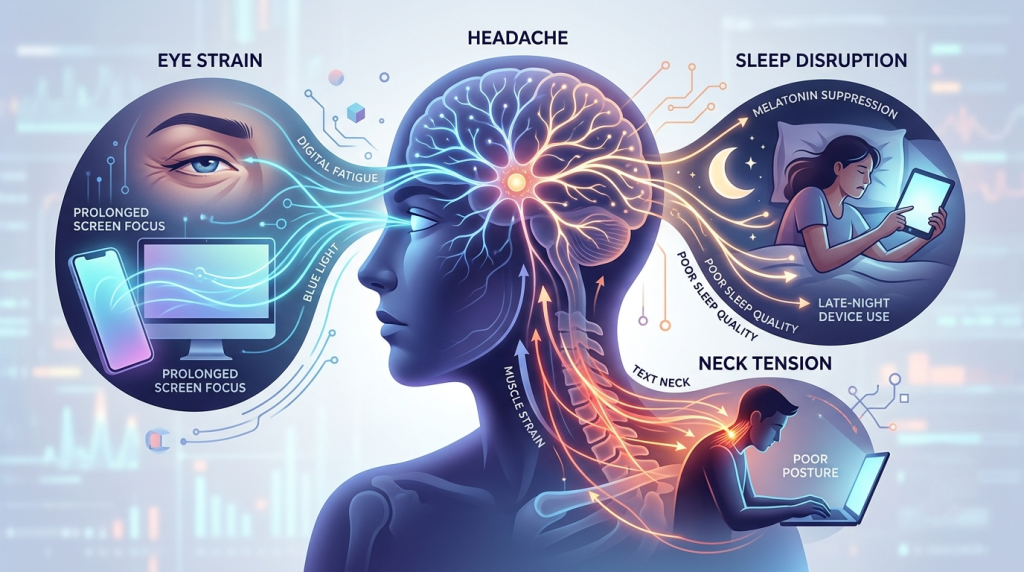
- The three main pathways are eye muscle fatigue, neck and posture tension, and sleep disruption.
- Blue light is real, but its direct link to headaches is overstated. Its bigger problem is what it does to your sleep.
- The 20-20-20 rule, ergonomic changes, and consistent breaks work better than blue light glasses for most people.
- Frequent or severe headaches that don’t improve with rest deserve medical attention.
Yes, Screens Really Can Cause Headaches – Here’s Why
The short answer is yes. Digital eye strain, also called computer vision syndrome, affects an estimated 66 to 69 percent of people globally, according to a 2024 meta-analysis covering more than 100 studies and 66,000 participants. That number has risen steadily since the pandemic merged work, school, and leisure onto the same screens.
Human eyes weren’t built for staring at a backlit point for eight or nine hours a day. When they do it anyway, the body makes it known.
The Three Pathways From Screen to Headache
Most articles focus on one cause, usually blue light or eye strain. But there are three overlapping mechanisms at work. Understanding all three is what lets you treat the actual problem instead of just managing the pain.
Pathway 1 – Digital Eye Strain (The Most Common Culprit)
When you focus on a screen for an extended period, your eye muscles hold a constant close-range contraction. Unlike a walk outside, where your eyes shift focus freely between near and far, screen work locks them in one mode for hours.
Those muscles fatigue.
There’s also a compounding factor most people don’t think about: your blink rate drops sharply at a screen. Normally, you blink around 15 to 20 times per minute. In front of a screen, which falls to 5 to 7. Fewer blinks means drier, more irritated eyes, which escalate into headaches faster than rested eyes do.
The medical term for screen-related headaches is asthenopia. It typically shows up as a dull, pressing pain across the temples or forehead. Symptoms tend to worsen after two or more hours of continuous screen use, which for many desk workers happens before lunch.
Pathway 2 – Your Neck, Not Just Your Eyes
Here’s the pathway most people miss: a significant number of screen headaches don’t start in the eyes. They start in the neck.
Cervicogenic headaches are caused by neck problems but are felt in the head. They’re common in heavy screen users, largely because of one nearly universal habit: the slow forward drift.
You start a session sitting fairly straight. Within an hour, your chin is out, and your head is in front of your shoulders. This forward-head posture is almost unconscious, but its effects aren’t.
For every inch your head moves forward from its neutral position, the effective load on your neck muscles roughly doubles. That sustained tension in the muscles at the base of the skull releases chemical pain mediators and restricts local blood flow. Both send discomfort upward into the head.
A 2025 study found that more than four hours of daily smartphone use in poor postural positions significantly increased both the frequency and severity of tension-type headaches in young adults.
If your headaches tend to come paired with a stiff neck or tight shoulders, this is likely your main pathway.
Pathway 3 – Screen Time, Sleep, and the Headache Feedback Loop
The third pathway works more slowly but is in some ways the hardest to break: screens disrupt sleep, and disrupted sleep causes headaches.
Blue light from devices, phones, and tablets especially suppresses melatonin. Melatonin signals to your brain that it’s time to wind down. Evening screen use tells your brain the opposite: that it’s still daytime.
The result is lighter, shorter, less restorative sleep.
And poor sleep is one of the most consistent headache triggers we know of. The cruel irony: tired people reach for screens more, social media, streaming, anything low-effort and stimulating. That drives more melatonin suppression, worse sleep, and more headaches the next morning. The loop is real, and it’s hard to break without deliberate friction, which is why knowing you should cut screens before bed rarely translates into actually doing it.
What About Blue Light – Is It Really the Villain?
Blue light earns some of its reputation. It carries more energy than other visible wavelengths and does contribute to visual fatigue. But it’s probably not the direct headache villain it’s often made out to be.
Its most firmly established harm is the sleep disruption described above, not a headache caused by looking at blue light itself, but one caused by the sleep it steals. Long-term retinal concerns from heavy blue light exposure are also a growing research area, but that’s a separate issue from everyday headaches.
As for blue light glasses, the evidence is genuinely mixed. There’s no strong clinical support for them as a headache solution for most screen users. Where there’s clearer evidence is for FL-41 tinted lenses in migraine patients specifically: studies show these reduce migraine frequency and intensity by blocking triggering light wavelengths. For non-migraine screen headaches, it’s worth talking to a neurologist or ophthalmologist, but ergonomic adjustments and consistent breaks tend to show better results for most people.

How to Stop Screen Headaches (What Actually Works)
The 20-20-20 Rule
Every 20 minutes, look at something at least 20 feet away for 20 seconds.
This lets your eye muscles release their close-focus contraction and encourages a natural blink. The mechanism is solid, and it’s widely supported by optometrists and headache specialists. The hard part is just remembering to do it, which is where external prompts and check-in habits become more useful than the rule itself.
Fix Your Setup, Not Just Your Screen Time
How you sit often matters more than how long:
- Monitor height: At or just below eye level. Looking up or craning forward strains both eyes and neck.
- Screen distance: 20 to 28 inches away, roughly arm’s length.
- Lighting: No glare from windows in front or behind you. Match screen brightness to your ambient room lighting.
- Posture: Arms at roughly 90 degrees, feet flat on the floor. Eliminating the forward lean cuts cervicogenic tension before it starts.
Build Real Breaks Into Your Day
Research recommends 10 to 15 minutes away from screens every one to two hours, not switching to a different app, but genuinely stepping away from focused screen attention.
The challenge is that deep work doesn’t announce when two hours have passed. It’s easy to look up and realize you’ve been in a focused session since before lunch; the gap is between intention and the moment you’d need to act on it.
External prompts close that gap. A simple timer works. So does a check-in tool that notices when you’ve been in a passive session too long and gives you a gentle nudge before the headache delivers the same message less gently. The specific method matters less than having something that creates the pause.
There’s also a pattern worth understanding: unstructured breaks don’t always help if they involve switching to another screen. The break needs to actually step away from the cognitive load of screen-focused work.
Protect Your Sleep
Cutting screens off an hour or two before bed is one of the highest-leverage changes you can make, not just for headache prevention but for overall recovery. Content keeps the brain stimulated even after the screen goes dark, and delayed sleep onset adds up fast.
If removing screens from the bedroom entirely is a stretch, do-not-disturb settings and charging outside the room are solid starting points.
When to See a Doctor
Most screen headaches resolve with rest and screen distance. But some don’t, and some shouldn’t wait. See a doctor if:
- Your headaches are becoming more frequent or more severe over time
- Over-the-counter pain relief isn’t working
- Headaches come with nausea, vomiting, or vision changes
- You experience sudden, severe head pain unlike anything before
- Pain wakes you from sleep
Conclusion
If most of your days end with a headache, your screen habits are very likely involved. But “use the computer less” is rarely the complete answer. The three pathways, eye strain, neck tension, and disrupted sleep, each respond to different interventions. The 20-20-20 rule and regular breaks address eye fatigue. Ergonomic setup handles the neck. A screen curfew before bed protects your sleep.
The common thread: almost all of it depends on noticing what’s happening in your body before the headache forces you to. Building a regular check-in habit into your screen day, a pause to actually sense how you’re sitting, how your eyes feel, how long you’ve been at it, tends to be what separates people who manage this well from people waiting for the ibuprofen to kick in. If you’re finding that hidden triggers keep pulling you back to screens even when you mean to step away, that pattern is worth looking at on its own.