

You know you’ve been on your phone too long. You put it down, look around, and pick it up again within ninety seconds.
Most lists of screen-free activities skip the actual reason you picked up the phone. You weren’t just bored in some generic way, you were stressed, tired, avoiding something, or your hand just moved on its own out of habit. What follows is organized around that: healthier alternatives to screen time matched to the actual feeling that sent you toward the screen, not a flat list of fifty generic ideas.
There’s no need for guilt or shame over reaching for your phone in the first place, screens are built to be reached for. The first few minutes of any screen-free activity often feel flat too, that’s not a sign it isn’t working. Screens deliver dopamine through variable rewards, the same mechanism that makes slot machines hard to walk away from, so stepping away from that rhythm feels underwhelming at first. Activities like reading, walking, or making something produce the same feel-good chemistry, just through accumulation instead of constant spikes. Most people stop missing the phone entirely after ten or fifteen minutes of genuine engagement. The hard part is surviving that first gap.
Quick Takeaways
- The feeling behind the reach determines which screen-free activity actually works in that moment.
- Offline activities feel flat for the first few minutes; that’s normal, not a sign they’re failing.
- The goal isn’t a screen-free life, it’s having something real to reach for instead of the default scroll.
Creative Projects & Activities for When You’re Bored
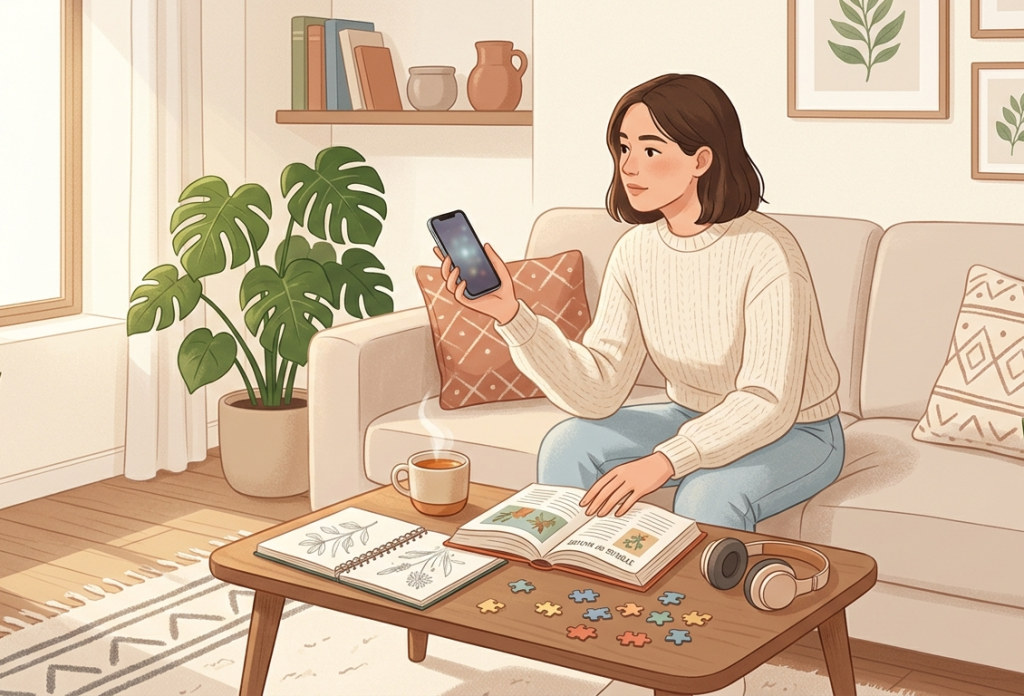
Boredom is the most common trigger for screen reach, and it responds best to activities that offer real stimulation, not just distraction, the kind that also happens to foster creativity along the way.
- Read something you’re genuinely curious about: A novel, a long magazine piece, a topic you’ve always wondered about. Ten to fifteen minutes is enough to get pulled in, and a physical book tends to work better than a screen here.
- Pick up a puzzle or strategy game: Board games, jigsaws, crosswords, anything that occupies your hands and your problem-solving brain at once, crowding out the restlessness that sent you toward the phone.
- Learn one small thing with your hands: Origami, a quick sketch, one guitar chord. Learning produces a steady, building reward that passive scrolling can’t replicate, and for some people this kind of absorbed, hands-on focus can tip into hyperfixation, which is worth understanding since it’s a different pattern from ordinary engagement.
- Cook or bake something from scratch: A new sauce, a loaf of bread. Cooking activates multiple senses and produces a concrete result, hard to stay bored while you’re actually making something.
- Go outside with no destination: Boredom often dissolves within minutes of outdoor light and fresh air, research on attention restoration suggests natural environments replenish exactly the focus that screen use depletes.
Matching Screen-Free Activities to Your Mood
- If you’re restless or avoiding something: the uncomfortable feeling underneath doesn’t go away while you scroll, it’s just delayed. Try a ten-minute walk to think it through rather than escape it, write down the one thing you’re avoiding, or do just the smallest completable step of the task you’re putting off, sending one email, writing one sentence. Momentum usually follows once that first step is done.
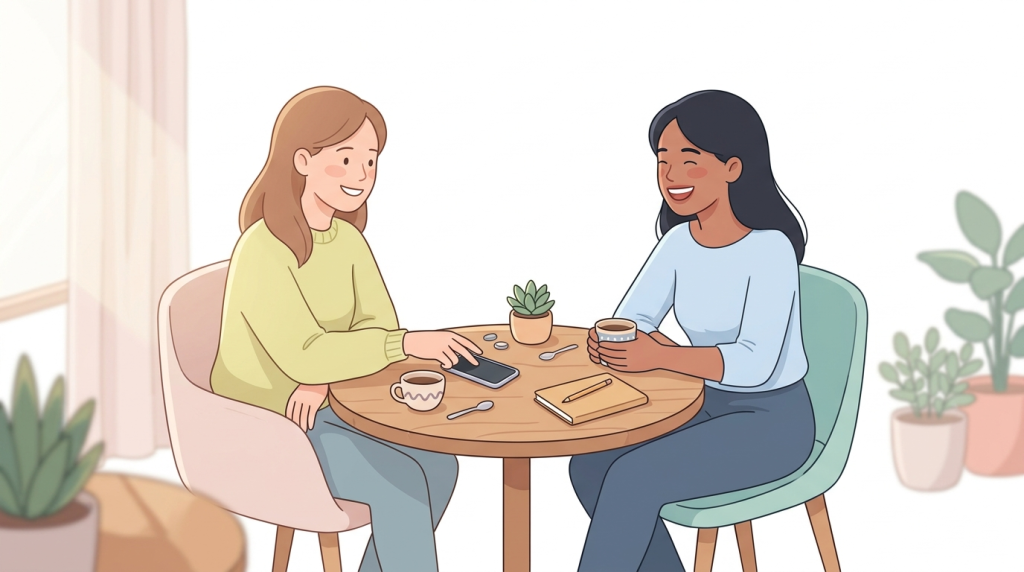
- If you’re stressed or overwhelmed: screens add more stimulation to an already overloaded system when what a stressed brain actually needs is the opposite. Slow your breathing deliberately for two minutes, box breathing works fast and needs no app. Step outside and do nothing specific, even five minutes measurably lowers cortisol. Call someone you genuinely like rather than scrolling their feed, since real conversation produces oxytocin, which directly counters stress hormones. Quality time with someone you care about tends to do more for stress than any solo activity on this list.
- If you’re tired: this is where screens do their sneakiest work, they feel like rest but aren’t, since the light suppresses melatonin while your brain keeps processing new stimuli. For genuinely quiet amusements that actually restore energy: an actual 10-20 minute nap, an audiobook or podcast lying down with your eyes closed, reading in bed with a physical book, or just sitting outside quietly with no task and no destination. Gentle movement, slow stretches, an easy walk, often restores more energy than staying still with a screen; this isn’t the moment for a workout.
When It’s Just Habit (The Automatic Reach)
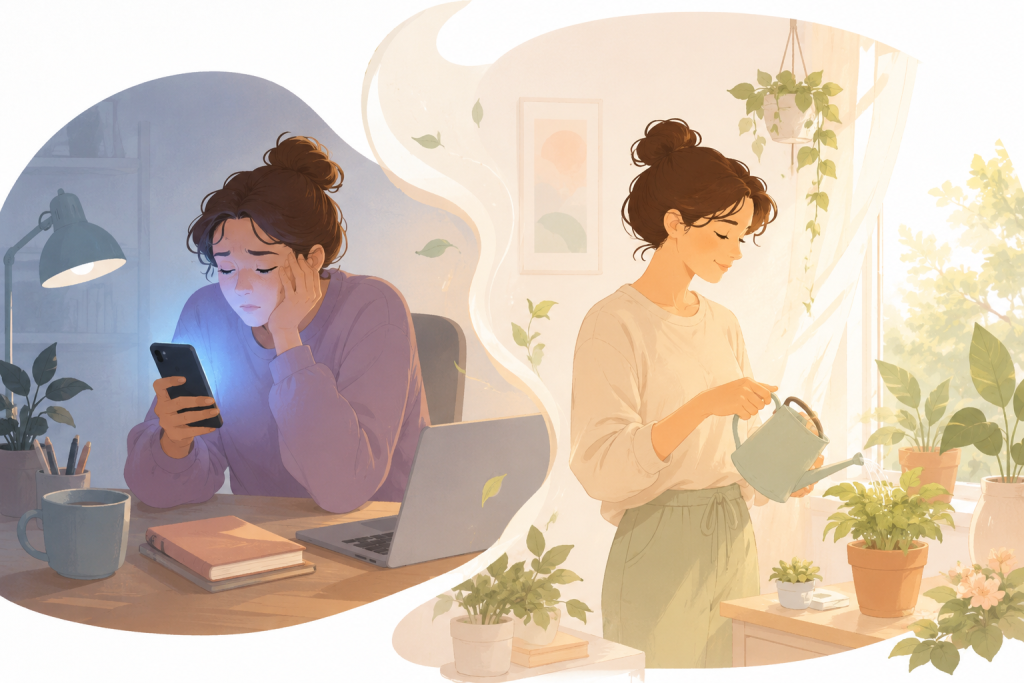
This is the most common and least acknowledged trigger for habitual screen time: there was no feeling driving it. Your hand just moved, waiting for the kettle, walking between rooms, standing in a queue.
- Put the phone in a different room: Physical distance is the single most effective intervention for automatic reach. If it isn’t on the table, the hand has nowhere to go.
- Replace the grab with a different physical habit: A pen, a small puzzle, something for the hands in that gap moment.
- Notice you’re doing it: The gap between the reach and the scroll is where change lives, even if you end up on the phone anyway, naming “there’s the reach again” gradually loosens the habit’s grip.
- Use a check-in that creates the pause for you: A tool that notices when you’ve drifted into passive screen time and offers a gentle nudge back removes the need to catch yourself manually. ComfortZoneCheckin works this way: it detects passive scroll loops and creates an exit ramp rather than a hard block. The pause is what matters, not the restriction.
Building the Habit of Reaching for Something Else
Knowing what to do isn’t the same as doing it, most screen habits formed over months of repetition, not one decision, and research on excessive screen use links it to measurable effects on sleep, stress regulation, and mood, which is part of why undoing the habit takes more than a single willpower push.
- Set up friction for screens and ease for alternatives: Charging your phone in another room or using grayscale mode adds friction to the screen; a book on the nightstand or a puzzle half-finished on the desk removes friction from the alternative. For a more structured option, tools like Cold Turkey Blocker automate that friction instead of relying on you to remember it. The thing that requires less effort wins most of the time.
- Start with five minutes, not a full detox: Large commitments to go screen-free for a week rarely hold. Five minutes of reading before checking the phone builds the muscle gradually.
- Match the substitute to the need: A walk helps more than a puzzle when you’re stressed; a book holds you better than stretching when you’re bored. That match is why a flat list of fifty activities rarely changes anyone’s habit.
If hidden triggers keep pulling you back to screens even after genuinely trying alternatives, it’s usually less about effort and more about the structure around your screen use.
Frequently Asked Questions
Depends on why you picked up the screen. Boredom responds to reading or puzzles, stress to movement or connection, tiredness to actual rest.
Physical changes work best, keep the phone in another room, add friction to unlock it, or use a check-in tool that creates a pause before the scroll takes hold.
Yes, but not immediately. Most people find real satisfaction after ten to fifteen minutes of genuine engagement.
Give it 15 minutes minimum. Early flatness isn’t evidence the activity isn’t for you, it’s the dopamine recalibration running its course.