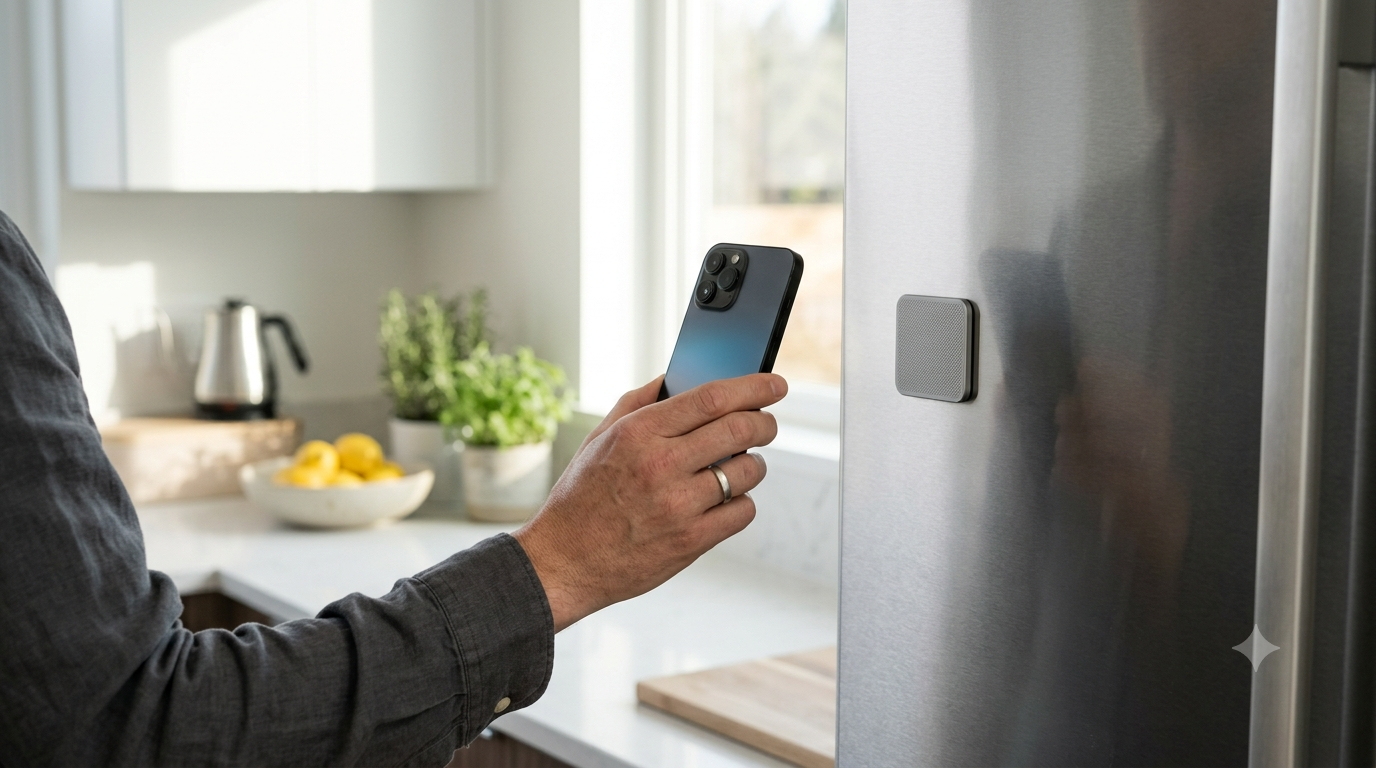

If you have ADHD and you’ve been struggling with your phone use, that number probably isn’t shocking. What might be surprising is this: the advice you’ve been given to fix it (the app blockers, the screen time limits, the “just put it in another room” rules) was mostly designed for people whose brains work differently than yours does.
That’s not an excuse. It’s a starting point. Children with ADHD are 9.3 times more likely to develop internet addiction than their peers without ADHD. Not slightly more likely. Nine times. The pattern carries into adulthood: a 2025 study published in the International Journal of Mental Health and Addiction found that adults diagnosed with ADHD had a 15% prevalence of social media disorder, compared to just 3.3% in a matched control group. Crucially, the ADHD group used social media primarily for Escape and Social Compensation, while controls used it for Entertainment and Social Maintenance. That distinction matters: when the phone is functioning as emotional self-regulation rather than recreation, standard usage-reduction strategies are solving the wrong problem.
This article is about why standard phone addiction strategies tend to fall apart with ADHD, what’s actually happening neurologically when you can’t stop scrolling, and what a genuinely ADHD-appropriate approach to breaking the pattern looks like. No willpower lectures. No generic tip lists. Just the stuff that accounts for how your brain actually works.
Why ADHD Brains and Phones Are a Particularly Difficult Combination
ADHD is primarily a disorder of dopamine regulation. The ADHD brain has fewer available dopamine receptors and transports dopamine less efficiently, which means it’s chronically underrewarded in ways that neurotypical brains aren’t. That shows up as restlessness, difficulty engaging with low-stimulation tasks, and a constant search for something more interesting.
Smartphones were built to deliver exactly that: novelty, stimulation, and immediate reward, on demand, infinitely.
The Dopamine Loop Up Close
Every notification ping, every new post in the feed, every “like” on something you posted: each one is a small dopamine event. The mechanism at work is called intermittent reinforcement. Rewards that appear unpredictably keep you engaged longer and more compulsively than rewards you can predict. It’s the same mechanism that makes slot machines difficult to walk away from.
For a neurotypical brain, this is compelling. For an ADHD brain that’s already searching for stimulation because its dopamine system is running low, it’s nearly irresistible. Studies show that between 144 and 186 times a day, the average American picks up their phone. For people with ADHD, the pull is structurally stronger.
The Hyperfocus Trap
ADHD isn’t just “can’t focus.” It’s also “can’t stop focusing” on things that are engaging enough to capture the brain’s full attention. Phones, especially social media and short-form video, are engineered to hit that threshold.
You sit down to check one notification. It’s interesting. Something adjacent appears. Then something funnier. Ninety minutes later, you surface, slightly foggy, wondering where the afternoon went. That’s not laziness or poor time management. That’s hyperfocus activated by a platform designed to sustain it.
The research confirms this mechanism directly. A 2023 study of 3,500 adults published in Frontiers in Psychiatry (Matsubara et al.) found that hyperfocus symptoms specifically mediated the relationship between ADHD traits and internet addiction. It wasn’t just that people with ADHD used the internet more. It was that hyperfocus was the mechanism: once engaged by sufficiently stimulating content, the same capacity for intense concentration that can make ADHD a strength in the right context becomes a liability when the object of that focus is an algorithmically optimized feed.
The Bidirectional Problem No One Mentions
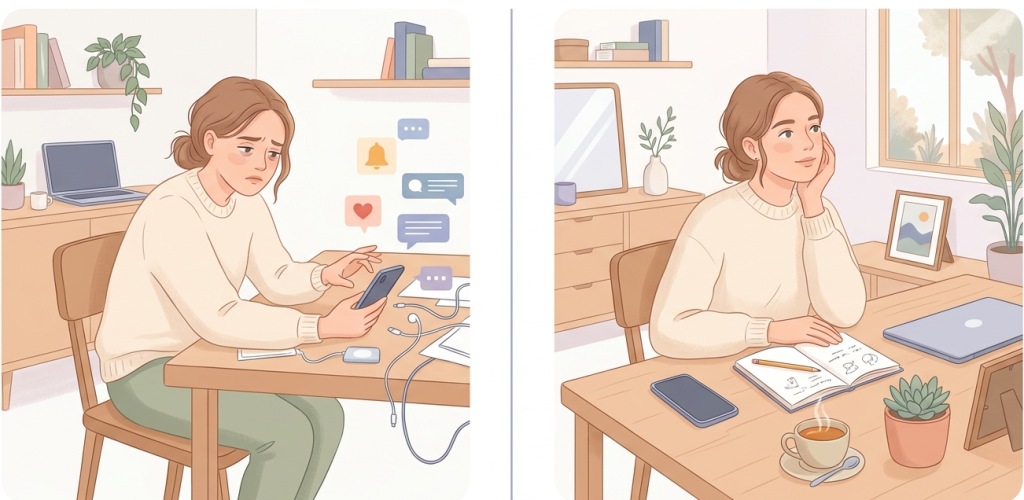
Here’s what makes phone addiction with ADHD particularly hard to address: it’s self-reinforcing.
Research has found that heavy screen use, particularly social media, impairs what researchers call “stopping behavior”: the ability to pause before acting. That cognitive brake is already weaker in ADHD brains. Regular high-volume phone use can make it weaker still, which increases the difficulty of resisting phone use, which leads to more phone use.
A 2023 longitudinal study published in Scientific Reports (Boers et al.) tracked nearly 4,000 Canadian high school students across five years and found that increases in screen time in a given year were directly associated with a worsening of ADHD symptoms within that same year. Social media specifically showed a lagged effect mediated by impulsivity – meaning the damage wasn’t just concurrent but carried forward, with each year’s heavier social media use making impulse control worse the following year. This is the clearest longitudinal evidence that the relationship runs in both directions: ADHD drives phone overuse, and phone overuse measurably worsens ADHD symptoms over time.
There’s also the boredom dimension, and it’s underappreciated. ADHD produces a more intense form of boredom than neurotypical people typically experience. Not just restlessness. Almost physical discomfort. Phones are the most efficient boredom-relief mechanism ever designed. For many people with ADHD, the phone isn’t entertainment. It’s self-regulation. Taking it away without addressing the underlying boredom leaves a gap that raw willpower is not equipped to fill.
That reframe matters for everything that follows. The phone isn’t the real problem. The unmet need the phone is filling is the real problem.
Why the Obvious Fixes Don’t Work for ADHD
You’ve probably tried some version of the standard toolkit. Screen time limits. App blockers. Leaving your phone in another room. Maybe you’ve set the same limit three times in a month, turned it off each time, and felt bad about it.
That’s not a character flaw. It’s the predictable result of applying willpower-dependent solutions to an executive function disorder.
Executive function is the cognitive system responsible for self-regulation, impulse control, and overriding automatic behaviors. ADHD directly and significantly impairs executive function. Strategies that require you to feel the urge to check your phone and then choose not to, repeatedly, across every moment of boredom and anxiety in your day, are asking the impaired system to override itself. It works sometimes. Under normal conditions, it tends not to hold.
App blockers have an additional structural problem. Any software running on your phone can be overridden by the person holding the phone. Operating systems give users ultimate control. The blocker will remind you of your commitment. The moment boredom or anxiety spikes, you’ll tap through the override, often without fully deciding to.
There’s also the replacement problem. “Put the phone down” without “and do this instead” leaves the boredom and the dopamine hunger completely unaddressed. The phone comes back.
If app blockers and screen limits haven’t worked for you, that’s not evidence that you’re not trying hard enough. It’s evidence that you need a different approach. We’ve covered the app blocker failure pattern in more detail in this post on what actually helps if you want the full breakdown.
What Actually Works: The ADHD-Appropriate Framework
The strategies that hold for ADHD phone addiction share one thing: they reduce or eliminate the need for willpower in the moment.
Instead of asking you to choose differently when the urge hits, they change the environment so the urge either doesn’t reach the same intensity or arrives after a brief gap where a different choice becomes possible.
Three things make this work.
- Friction means adding steps between the impulse and the phone. Not blocking it. Slowing it. A neuropsychologist at Marcus Neuroscience Institute at Baptist Health found that a 72-hour break from smartphones can measurably change how dopamine behaves in the brain. That’s not achievable for most people overnight. But the brain does respond to reduced stimulation over time. Every friction-added moment has a cumulative effect.
- Replacement means giving the ADHD brain a different way to meet the need the phone is filling. Boredom relief, stimulation, regulation. The replacement has to address the actual need, not just occupy the hands.
- Awareness means interrupting the autopilot before the session takes hold, not after forty minutes. The goal is to surface the question “what am I actually looking for right now?” at the moment the urge appears, before the decision is made below conscious attention.
These three levers work together. Friction creates the gap. Replacement fills the gap with something useful. Awareness makes the gap visible in the first place. The how-it-works page at ComfortZoneCheckin describes how a loop-detection check-in applies exactly this approach: catching passive scroll drift at the 20-minute mark before it becomes an hour. how a loop-detection check-in applies exactly this approach: catching passive scroll drift at the 20-minute mark before it becomes an hour.

Practical Steps to Break the Pattern
Start with one. Not all of them.
Change the Phone’s Environment, Not Just Its Settings
The most durable friction changes are physical, not digital.
- Switch to grayscale. Color is a dopamine trigger. A gray phone screen is less visually compelling. It sounds trivial; it genuinely reduces the pull. On iOS: Settings > Accessibility > Display and Text Size > Color Filters > Grayscale. On Android: Developer Options > Simulate Color Space > Monochromacy.
- Delete the apps, don’t just block them. Reinstalling an app takes longer than bypassing a blocker. That 90-second reinstall window is often enough friction to let the impulse pass. You can reinstall if you genuinely need it. Most times, you won’t.
- Move social and entertainment apps off the home screen. Getting to them requires a search or extra navigation. That half-second pause can be enough to break the autopilot loop, especially in the early weeks of changing the pattern.
- Charge the phone outside the bedroom. This removes the first-thing-morning and last-thing-night phone sessions. Both tend to set the tone for the day’s overall use and interrupt sleep quality, which worsens ADHD symptoms the next day.
Design Specific Windows for Phone Use
Cold turkey doesn’t work well for ADHD. Complete abstinence spikes the deprivation response. Structured access is more sustainable.
Pick two or three specific times in the day when you check your phone intentionally, not reactively. Morning after coffee, midday, early evening. Outside those windows, the phone stays face-down or in another room.
This works with ADHD’s natural attention rhythm rather than against it. You’re not denying the urge permanently. You’re redirecting it to a specific moment. That’s a much smaller ask.
Address the Boredom, Not Just the Phone
Before choosing a replacement, identify what the phone is actually doing for you in the moment you reach for it.
Bored and restless? A brief walk, especially outdoors, genuinely helps. Dr. John Ratey at Harvard Medical School has described how movement activates the executive function network, making you less impulsive and more focused afterward. Even five minutes count.
Anxious and overwhelmed? Physical fidgeting (a fidget ring, tapping, sketching) can address the nervous system regulation need without a screen.
Avoiding a task? That’s procrastination disguised as phone use. A two-minute timer is often more useful than willpower: “I’ll just start for two minutes.” Procrastination loops, task avoidance patterns, and the scroll spirals they produce are specific patterns the ComfortZoneCheckin use cases section breaks down in detail for different work contexts.
Create a Check-In Before the Session Starts
This is the awareness lever, and it’s often the most effective for ADHD specifically.
Before you unlock your phone, ask one question: “What am I looking for right now?”
Not as a guilt trip. Just as information. You might be looking for a specific thing, in which case, find it and stop. Or you might realize you’re not looking for anything specific. You’re bored, avoiding something, or running on autopilot. That moment of noticing is often enough to redirect.
A physical cue helps: a small sticky note on the back of the phone, a rubber band around it, or a phone grip with a specific texture you’ve chosen to associate with this question. The cue prompts the check-in before the unlock happens.
Professional Support Worth Considering
For some people, phone use has crossed into territory that genuinely disrupts daily functioning: missed deadlines, damaged relationships, sleep impairment severe enough to affect cognitive function. If that’s where you are, self-directed strategies alone may not be enough.
Cognitive behavioral therapy (CBT) has solid evidence behind it for addressing compulsive behaviors, including phone use patterns. An ADHD-informed therapist can help identify the specific thought patterns and triggers driving the behavior.
ADHD coaching focuses on building external structures to compensate for the internal regulation deficits that make self-imposed limits hard to keep. It’s different from therapy. More practical, more accountability-focused.
And if you’re not currently treating the underlying ADHD, clinical data shows that medication addressing the core attention regulation deficit can reduce compulsive internet and phone use as a downstream effect. The addiction behavior and ADHD share the same root. Treating the root helps.ows that medication addressing the core attention regulation deficit can reduce compulsive internet and phone use as a downstream effect. The addiction behavior and ADHD share the same root. Treating the root helps.
Conclusion
Phone addiction with ADHD is not a self-control problem. It’s a design problem.
Your brain is working exactly as it’s built to: seeking stimulation, avoiding discomfort, and responding powerfully to intermittent rewards. Phones are built to exploit those tendencies in everyone. For ADHD brains, the pull is considerably stronger.
The strategies that hold aren’t the ones that demand more discipline from you. They’re the ones who redesign the environment, so less discipline is needed in the first place. Start with one friction change today. Not five. One.
If you’re ready to try the check-in approach, ComfortZoneCheckin is free to start.
Frequently Asked Questions
Yes, significantly. Research shows people with ADHD are at substantially higher risk of internet and smartphone addiction due to lower dopamine regulation and impaired executive function. One widely cited study found children with ADHD were 9.3 times more likely to develop internet addiction than peers without ADHD. The phone delivers exactly what the ADHD brain is searching for: novelty, stimulation, and immediate reward.
App blockers require executive function to enforce, which is the same cognitive system ADHD impairs. They’re also easy to override on most devices. For ADHD users, the impulse to bypass a blocker during a boredom or anxiety spike is often stronger than the commitment made when the blocker was installed. Friction-based approaches that don’t rely on in-the-moment decision-making tend to hold better.
Potentially, yes. Clinical data show that addressing the underlying attention regulation deficit through medication can reduce compulsive internet use as a secondary effect. Medication works best when combined with behavioral strategies and, where appropriate, professional support like CBT or ADHD coaching.
Change the environment before trying to change the behavior. Remove social apps from your home screen, switch your display to grayscale, and charge your phone outside your bedroom. These friction additions reduce autopilot checking without requiring willpower. Pair with one scheduled replacement activity for the time you’d usually spend scrolling. Even a five-minute walk counts.