
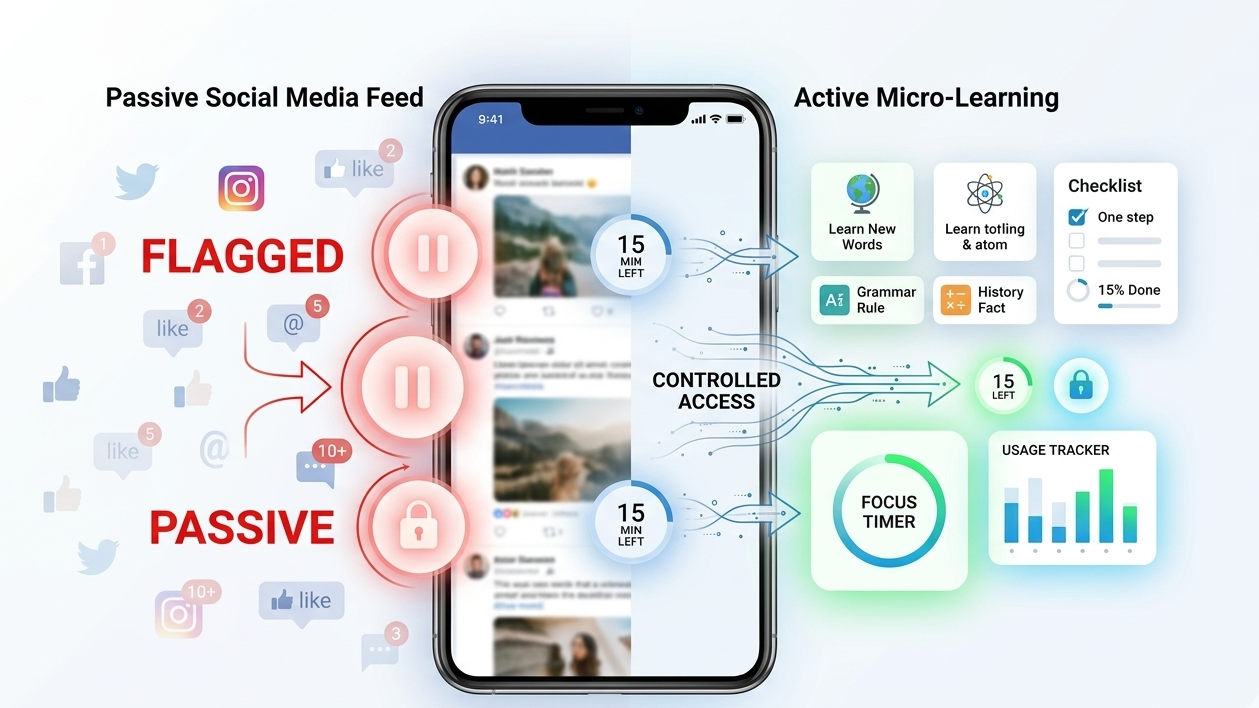
“Just delete the app.” It sounds like the simplest fix when someone wants to cut back on social media, but for most people it doesn’t stick, because the accounts, connections, and years of memories are still something they want to keep. Social media becomes problematic when it turns into an automatic reflex rather than a choice, unlocking your phone and opening Instagram without thinking, or checking Twitter for two minutes and surfacing twenty minutes later, often pulled back in by exactly the kind of rage-bait content designed to provoke one more tap. As of 2022, the average person worldwide spends about 2 hours and 27 minutes a day on social media, which is exactly the kind of reflexive, unplanned usage these apps are built to interrupt.
The real fix isn’t deletion, it’s the shift from mindless scrolling to intentional social media use: still keeping your accounts, still staying connected, but choosing when you open the app instead of the app deciding for you. Several tools exist specifically to introduce that choice back into the habit, adding a pause, a limit, or a schedule, without asking you to give anything up entirely.
The Psychology of a Digital Detox
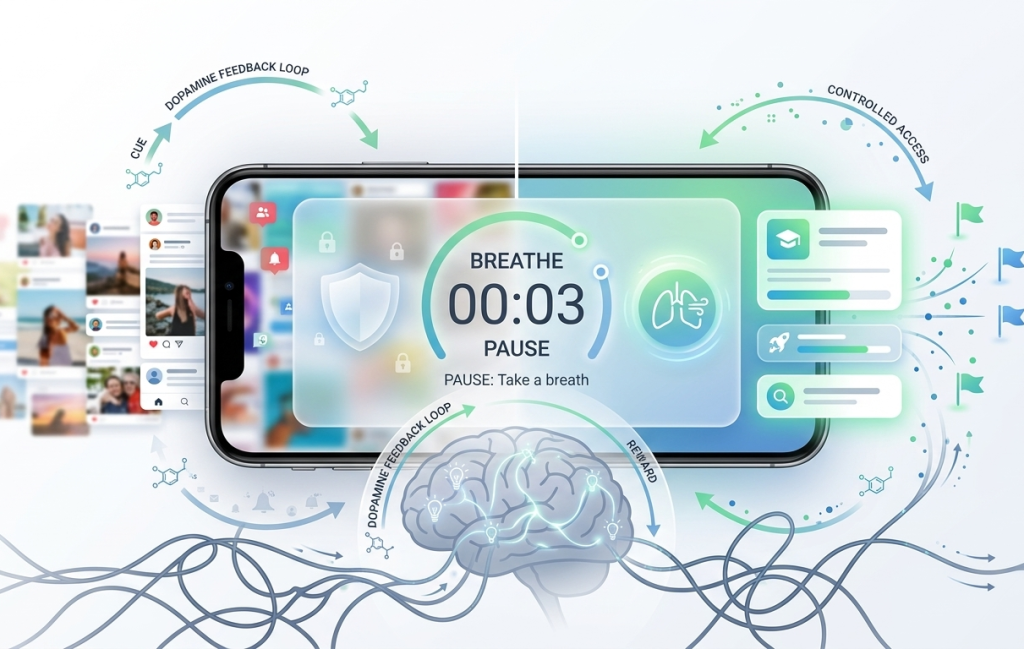
A digital detox doesn’t have to mean disappearing from every platform for a month. That kind of all-or-nothing approach is exactly what makes most detox attempts fail; deleting everything for thirty days when social media is deeply woven into daily life sets up an unrealistic standard that collapses the first time willpower runs low. Social media is built to make that willpower fail: it’s engineered to deliver unpredictable rewards, so the pull to check “just in case something’s there” isn’t a personal weakness; it’s the intended design of the product.
That’s why an intermittent detox, structured pauses and limits rather than permanent removal, tends to hold up better than quitting cold turkey. The apps in the next section don’t ask you to rely on willpower at all. Instead, they build the boundary into the phone itself, so the decision only has to be made once, when you set it up, rather than every single time you’re tempted to check.
7 Apps for Intermittent Detoxes
Friction-based apps slow down the moment before you open an app, giving you a chance to reconsider.
- One Sec: adds a short breathing pause before apps like Instagram or TikTok open. Many people reach for social media automatically, without registering the decision at all, and that brief interruption is often enough to reveal there wasn’t really a reason to open it in the first place.
- ScreenZen: works differently: instead of a pause, it caps how many times you can launch a given app per day. Once you hit the limit, checking stops being a reflex and becomes something you save for when you actually want it.
Blocking apps remove access entirely for a set period, so there’s nothing to negotiate with once a session starts.
- Stay Focused: lets you set strict daily time limits or lock modes on specific apps, enforced automatically rather than relying on self-control in the moment.
- Freedom: blocks distracting apps and sites during scheduled work or study hours, so a glance at your phone during deep work simply isn’t an option until the session ends.
- Opal: creates scheduled windows, social media available in the evening, say, and unavailable the rest of the day, so checking constantly gradually stops being an option worth reaching for.
Tracking apps build awareness first, on the theory that most people underestimate how much time actually disappears into scrolling.
- RescueTime: tracks how often social apps interrupt your day and shows exactly where the time goes, which is often the first real motivator for change.
- Forest: takes a different angle entirely: instead of measuring lost time, it rewards focus directly, growing a virtual tree while you stay off your phone, and letting it die if you don’t.
The apps above work best combined into a simple post-and-leave workflow: open the app with a specific purpose, do that one thing, then close it, rather than letting one glance turn into an open-ended scroll. A friction app like One Sec catches the automatic opens. A scheduling app like Opal or a blocker like Freedom protects the hours where checking would cost you the most. And a tracking app like RescueTime shows you, over time, whether the other two are actually working.
None of this requires giving up social media or the connections built on it. It just moves the decision about when to use it from the app’s design back to you, which is where the stress reduction actually comes from: less about spending less time overall, and more about not feeling pulled toward the app every few minutes without having chosen to be. If you’re weighing this approach against a stricter social media detox, it’s worth comparing which method actually fits your habits before committing to either.
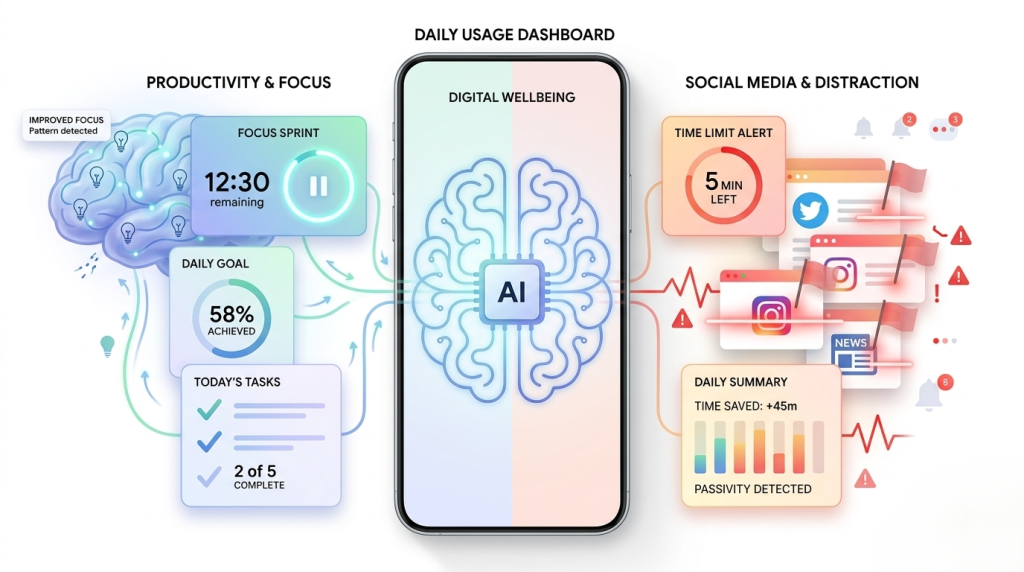
Completely removing social media might seem like the fastest fix, but it’s rarely the most sustainable one. For most people, these platforms still matter for staying in touch and informed, so the goal isn’t elimination; it’s structure. Building healthier habits takes time, and willpower alone rarely holds up on its own.
By introducing pauses, limits, schedules, and honest tracking, these tools help you regain control over your attention without deleting a single account. Over time, social media stops being something that pulls you in automatically and becomes something you choose to engage with, on your own terms. terms.