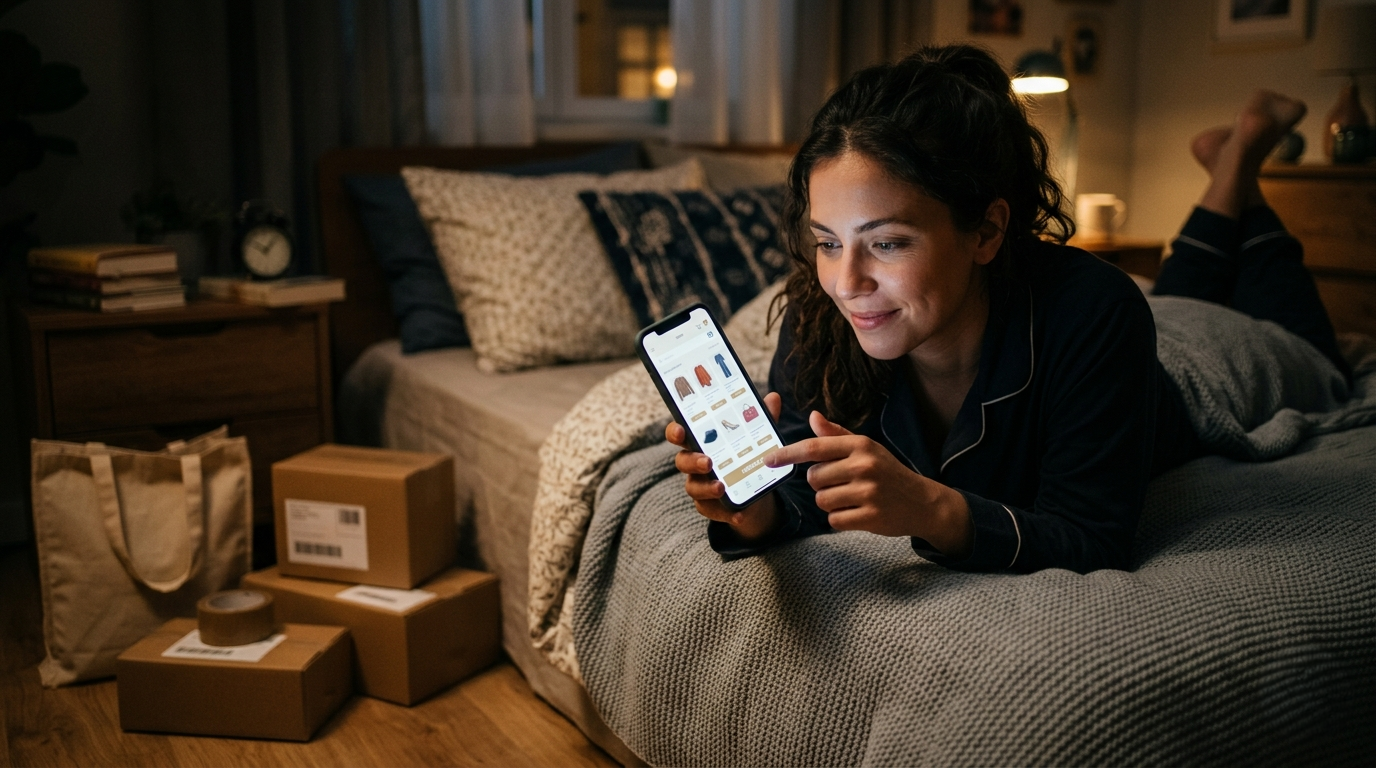
It’s 1am, and you’re adding a fourth item to a cart you didn’t even plan on opening. 76% of Americans say they get more excited watching an online order arrive than buying the same thing in a store. That’s not an accident, it’s built into how checkout works, and it’s the same impulsive online shopping pattern that’s brought most people here: hiding a delivery from a partner, or feeling oddly empty the second you hit “buy now.” Here’s what’s actually going on, and what helps stop it.
What counts as an online shopping addiction?
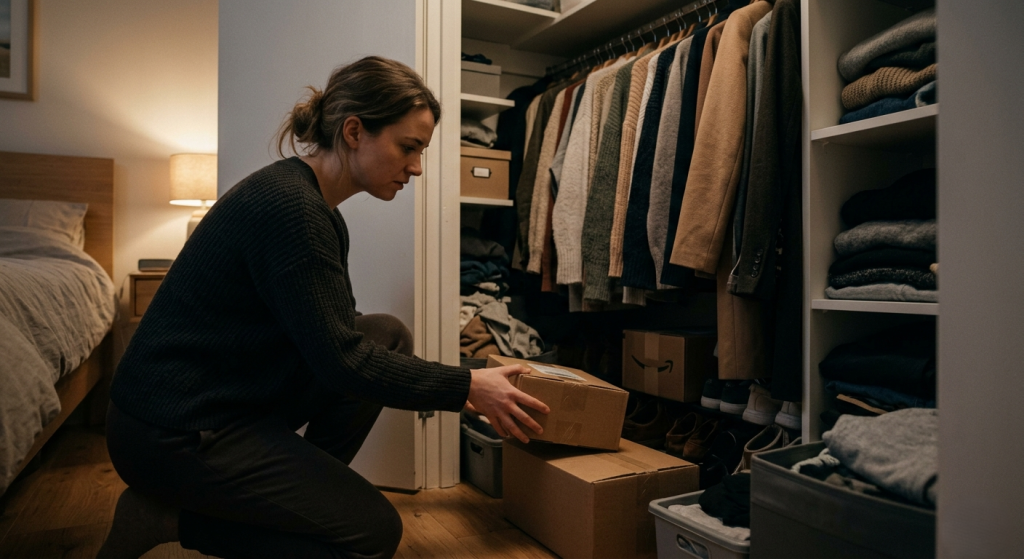
It’s a pattern, not a single splurge. Someone with a shopping addiction can’t stop at “just this once,” keeps buying despite mounting debt or conflict at home, and feels the urge as a compulsion rather than a choice. A few more specific signs are worth naming: hiding purchases or lying about the cost, boxes piling up unopened because buying mattered more than using, shopping specifically to cope with a bad mood, guilt hitting almost instantly, sometimes before the item even ships, and having tried to cut back without it sticking. One or two of these alone aren’t a red flag. Several together, especially if they’re straining your finances or relationships, are worth taking seriously.
Researchers call this compulsive online shopping, or compulsive buying disorder. It’s not its own official diagnosis in the DSM-5, but clinicians recognize and treat it anyway, and it’s more common than most people assume. One study estimated compulsive buying at just under 6% of U.S. adults before the pandemic, a number that climbed during COVID and again after stimulus checks landed. That tracks with a broader body of research: a 2016 meta-analysis pooling data across 16 countries put the general adult prevalence around 5%, with estimates as high as 5-8% depending on the population studied. Part of the rise also just tracks with how much shopping has moved online, e-commerce now makes up nearly 17% of all U.S. retail sales. So if you’ve Googled this at 1am, you’re far from the only one.
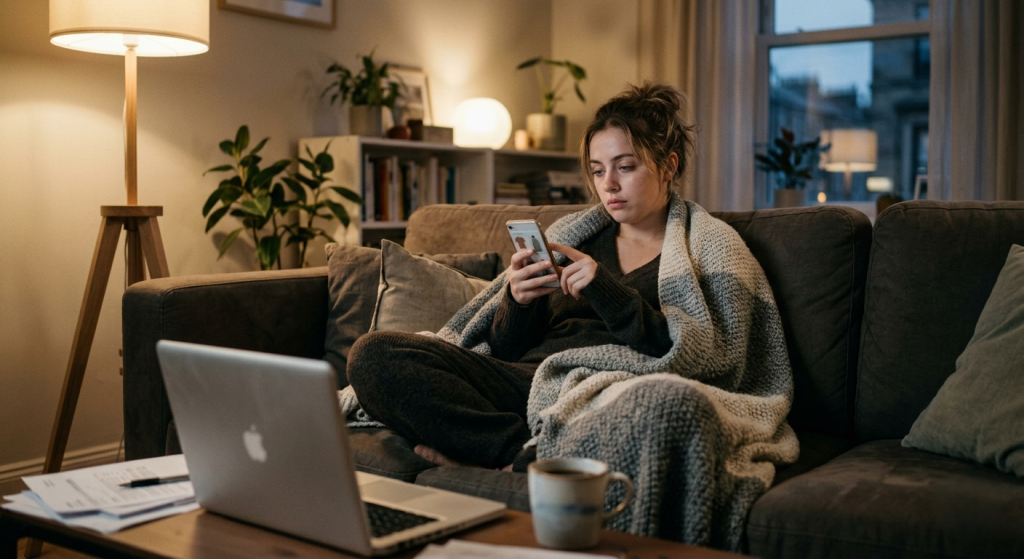
What causes the urge to shop online?
Your brain’s reward system fires before you buy anything, not after. A Stanford study found that a dopamine-linked brain region lights up just from looking at products you want, anticipation talking, not the purchase itself. Researchers describe this pattern as an uncontrollable shopping motivation, being so consumed by the urge to shop that it starts impairing other important parts of life, which is a useful reframe if you’ve been telling yourself this is just a willpower problem. It isn’t. It’s a recognized psychological loop, not a personal failing.
A few things make the urge stronger. Uncertainty is one: flash sales and mystery drops spike dopamine harder than a predictable purchase would, the same unpredictability that makes slot machines and infinite feeds hard to put down. Emotional triggers are another, stress, boredom, and loneliness push people toward “retail therapy,” and it does work, for about as long as the confirmation page stays on screen. Easy financing plays a role too: buy-now-pay-later removes the one moment a price tag might make you pause. Most of this runs on autopilot, the same way subconscious patterns quietly steer other screen habits you never consciously chose.
There’s also a physical piece to this worth naming: motor impulsivity, acting rashly without pausing to reflect first. In a store, you walk to the register, wait in line, maybe put something back before you get there. Online, a saved card and one-click checkout collapses that entire sequence into about four seconds. A Stanford psychiatrist who studies compulsive buying puts it simply: online shopping satisfies the urge faster, which makes it harder to resist. That’s not a character flaw, it’s a friction problem, and the late-night, half-conscious scroll-and-buy pattern people call doom shopping thrives specifically because nothing in the process asks you to slow down.
The guilt that follows makes more sense once you see the pattern clearly. The good part was never really about the item, it was the anticipation, doing its job before you ever hit “confirm order.” The moment the purchase locks in, that system has nothing left to want, and whatever you were shopping to avoid is often still sitting right there. That’s the gap that keeps the cycle turning, the same dip that shows up after a long scroll, and it responds to the same fix: a genuine dopamine reset, not another quick hit.
What does it do to finances and relationships?
Financially, it usually means mounting credit card balances and buy-now-pay-later plans stacking on top of each other until the math stops working, debt accumulation that compounds quietly because each individual purchase felt small in the moment. Emotionally, it’s a loop: guilt, shop, relief, guilt again, and the relief barely lasts. A psychologist at NYU Langone has noted that filling a cart often feels better than the item’s arrival ever does. On relationships, hidden purchases and lying about spending erode trust in a way that’s hard to walk back, especially with a joint account. Stopping that slide, rather than just naming it, is really the whole point of what comes next.

What actually helps break the cycle?
Most advice here amounts to “just stop.” Delete the app. Try a no-spend month. Set a budget. None of that is wrong exactly, but it leans entirely on willpower, and willpower fixes tend to quietly fall apart by week three. What tends to hold up better is changing the environment instead, the same idea behind staying disciplined without willpower.
- Step 1: Remove the one-click path
Delete saved card details so checkout takes real effort again. This alone reintroduces the pause that in-store shopping has built in and online shopping removed. - Step 2: Use the wishlist approach
When you want to buy something, add it to a wishlist or cart and wait 24 to 48 hours before finishing the purchase. This is consistently one of the most effective tactics for most people, simple enough to actually use, and it separates a real want from an impulse fairly reliably. If it’s still worth buying two days later, buy it. Most of the time, the urge has already faded. - Step 3: Cut off the triggers at the source
Unsubscribe from marketing emails and turn off shopping app notifications. You can’t resist a flash sale you never see. - Step 4: Build in relapse prevention, not just a one-time fix
A single slip doesn’t undo progress, it’s information. Notice what triggered it, stress, boredom, a specific app, a specific hour, and adjust the environment around that trigger rather than treating the slip as proof the whole approach failed. - Step 5: Bring in outside support when the pattern outgrows self-management
Talk to a therapist if debt is becoming unmanageable, if the lying about purchases keeps escalating, or if the shopping is tangled up with anxiety or depression bigger than the spending itself. That’s not a sign of failure, a professional can help figure out which piece needs attention first. Cognitive behavioral therapy currently has the strongest treatment evidence for compulsive buying, because it catches the emotional trigger before the urge takes over, instead of fighting the urge once it’s already in charge.
When should I get professional help?
A few signs it’s time to talk to someone: debt becoming unmanageable, lying about purchases that keeps escalating, or shopping tangled up with anxiety or depression bigger than the spending itself. That’s not a sign of failure. A professional can help figure out which piece needs attention first.
Online shopping addiction isn’t a character flaw. It’s a loop: trigger, anticipation, purchase, brief relief, guilt, repeat. Understanding it is the first step. Changing the environment around it, rather than promising yourself you’ll do better next time, is usually what makes it stick. You can find more habit-loop breakdowns if you want to dig deeper into why these patterns form and how to interrupt them.