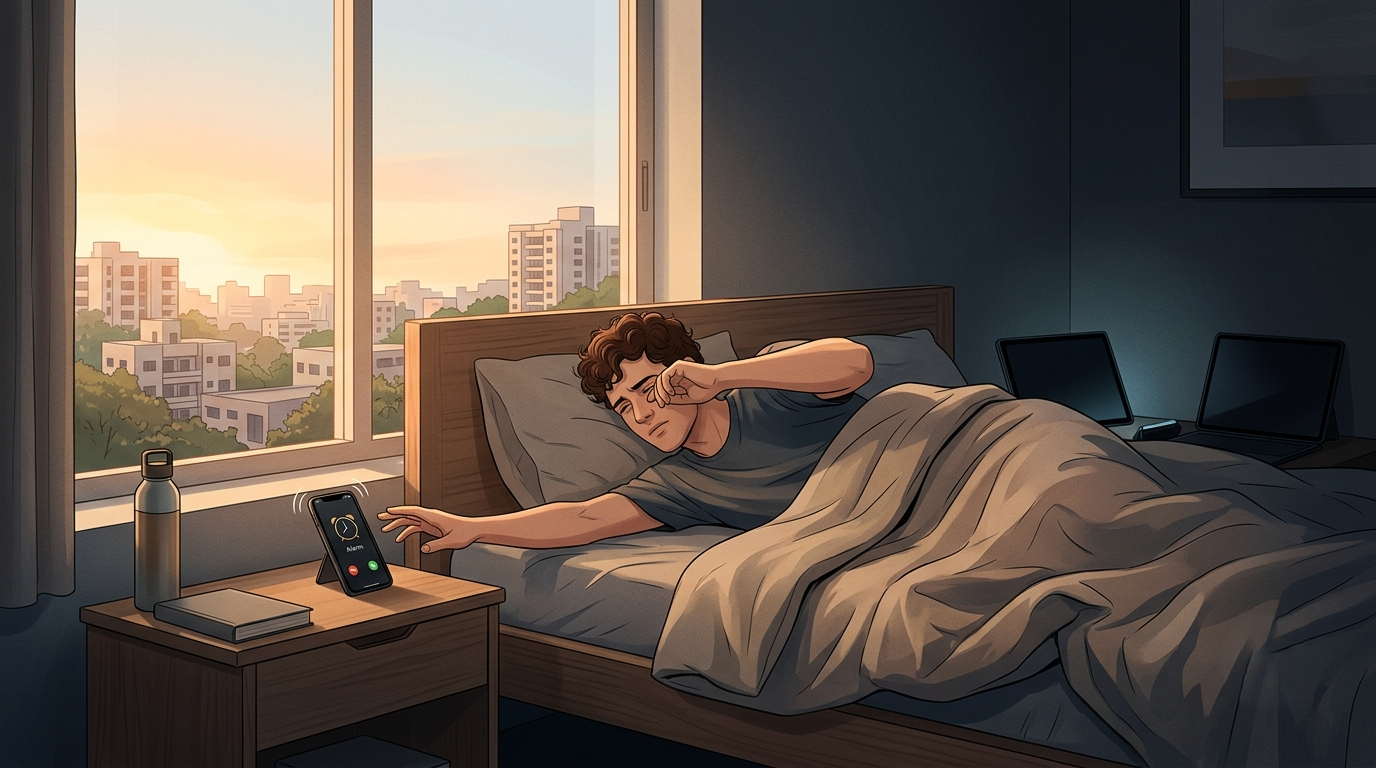

Think about the last time you drove somewhere familiar and arrived without really remembering the drive. Or typed a password without consciously recalling each character. Something in you knew exactly what to do, and it wasn’t the part of you that was “thinking.”
That’s your subconscious mind at work, and it’s running far more of your life than most people realize. This isn’t a vague self-help idea. It’s a well-documented feature of how your brain is built, with a specific mechanism behind it, a specific way it forms, and specific limits on how you can actually change it. Here’s what the subconscious mind is, how it gets built, how to recognize when it’s steering, and why the usual advice for “reprogramming” it tends to miss the point.
What Is the Subconscious Mind?
Your conscious mind is the part of you reading this sentence right now. It’s deliberate. It’s aware. It can really only focus on one thing at a time. Your subconscious mind is everything else. It’s the big background system running your habits, emotional reactions, and automatic behavior without asking your permission first.
It helps to separate two terms that people often mix up. The subconscious is mental activity just below awareness. You can usually notice it if you pay attention, like catching yourself gripping the steering wheel too tightly. The unconscious is different. It refers to material that’s harder to reach directly, like early memories or deep emotional associations. The line between the two isn’t perfectly sharp. But it’s a real distinction that a lot of casual explanations skip.
This isn’t a fringe or mystical claim. Neuroscience research from Berlin’s Bernstein Center for Computational Neuroscience, led by John-Dylan Haynes, found that decisions show up in brain activity up to 10 seconds before a person becomes consciously aware of making them. Your brain is often already partway to a decision. The conscious, narrating part of you catches up later.
Freud gets credit for popularizing the idea of layered minds over a century ago. Many of his specific theories haven’t held up. But the core insight was right: most of what you do runs below conscious awareness. Modern neuroscience just gives us a much clearer picture of how.
How the Subconscious Mind Is Formed
The subconscious isn’t handed to you fully built. It’s constructed, mostly through repetition, and it starts early.
Childhood plays an outsized role. In the first several years of life, the brain absorbs a huge amount of information about how the world works, what’s safe, and what earns approval. Most of that happens with little conscious filtering. Beliefs formed in that window, about your own capability, about relationships, about what to expect from the world, tend to settle into the subconscious. They keep operating well into adulthood, often without ever being consciously examined.
Beyond childhood, the subconscious keeps forming the same way throughout life: through repetition in a consistent context. Any thought, reaction, or behavior repeated enough times in a similar setting eventually gets encoded as an automatic pattern. This is the same basic mechanism behind every habit loop. A cue triggers a craving. The craving triggers a response. The response delivers a reward. The whole sequence repeats until it no longer requires conscious thought.
MIT research led by neuroscientist Ann Graybiel offers a clear physical account of this shift. As a behavior becomes habitual, control moves away from the prefrontal cortex, the brain’s conscious, decision-making region, and over to the basal ganglia, a much older structure built for running sequences automatically. The behavior becomes “chunked.” It can now execute with barely any conscious input. This is quite literally how a subconscious pattern gets built. Not through willpower or intention, but through repetition wearing a groove into the brain’s wiring.

Signs Your Subconscious Mind Is Running the Show
Because the subconscious operates below awareness by definition, it can be hard to notice directly. A few common signs tend to show up:
- Reactions that don’t match your stated goals: You want to stay calm in an argument, but you feel your jaw tighten and your tone sharpen before you’ve consciously decided to react that way.
- “Coming to” partway through an activity: You look up from a task and realize a stretch of time has passed with no clear memory of deciding to be there, driving, eating, scrolling, cleaning.
- Patterns you consciously want to change but can’t seem to shift: You’ve decided, sincerely, to do something differently, and the old pattern shows up anyway, faster than your intention can intervene. This is a familiar story for anyone who has tried to break a phone habit and found willpower alone wasn’t enough.
- Physical or emotional responses that arrive before conscious thought: A racing heart before you’ve identified what you’re anxious about. A craving before you’ve noticed the trigger that caused it.
None of these means something is wrong with you. They mean your subconscious mind is doing exactly what it’s built to do: running well-worn patterns so your conscious mind doesn’t have to re-decide everything from scratch, every time.
The Modern Example: Your Phone Is the Clearest Proof
If you want one measurable, everyday example of the subconscious mind in action, you’re probably holding it. Americans now pick up their phones close to 186 times a day, roughly once every five minutes of waking life. That’s not evidence of weak willpower. It’s a textbook case of a subconscious pattern running on autopilot.
Here’s the mechanism in miniature. A cue arrives: boredom, a lull in conversation, a flicker of stress. Wolfram Schultz’s research at Cambridge found that dopamine neurons fire more strongly at the anticipation of a reward than at the reward itself. That means the urge to check your phone spikes at the cue, before you’ve even unlocked the screen. Repeat that sequence enough times, and it becomes exactly the kind of chunked, basal-ganglia-driven habit described above. That’s why deciding, sincerely, to check your phone less often so rarely works on its own; the same pattern shows up in compulsive YouTube watching, where one video turns into an hour with no clear decision in between.
ComfortZoneCheckin, a digital wellness tool, calls this specific pattern a Comfort Loop: the moment passive, unstructured time quietly turns into minutes of automatic scrolling. It’s the same underlying mechanism behind why people struggle to stop using Instagram. The subconscious mind doesn’t distinguish between apps. It just runs the pattern it’s been trained to run.
Why Willpower Doesn’t Work Against the Subconscious
Once you understand the mechanism, it’s obvious why “just try harder” consistently fails against a subconscious pattern. Willpower is a function of the prefrontal cortex. The habit itself lives in the basal ganglia and the brain’s reward system, a much older, more powerful part of the brain that doesn’t answer to conscious instruction.
Addiction psychiatrist Dr. Judson Brewer, at Brown University, compares fighting a habit with willpower to standing in front of a river and trying to stop it with your hands. You might hold for a while. The water doesn’t get tired.
There’s also less science behind “willpower” as a concept than most people assume. A 2016 attempt to replicate the popular theory that willpower depletes like a battery over the course of a day, tested across 23 labs and 2,000 participants, found no reliable evidence for it. The idea feels intuitively true. It just doesn’t hold up under scrutiny. This applies well beyond phone habits, it’s the same reason diets, resolutions, and “just stop” advice tend to fail against any subconscious pattern, not only screen time.

How to Actually Work With Your Subconscious Mind
Because the subconscious was built through repetition, it changes through repetition too. Not through a single insight or an affirmation repeated in the mirror. That’s the basic idea behind neuroplasticity. A pathway strengthened by consistent repetition can weaken the same way, with enough reps going in a new direction.
The most reliable lever isn’t more discipline. It’s awareness. That means catching the pattern partway through, before it completes on autopilot, and handing a sliver of attention back to the conscious mind. In practice, this can look like naming the actual cue behind a reaction, not just the surface behavior. It can mean a brief pause between an urge and an action. Or working with a therapist to surface a pattern that’s run unexamined for years. Journaling, meditation, and structured reflection all work the same way: they interrupt an automatic loop long enough for the conscious mind to get a vote.
Applied to the phone example above, this is the logic behind ComfortZoneCheckin’s Loop Detection algorithm. It watches for the passive dwell time that signals a Comfort Loop starting. Then it delivers a gentle nudge. That nudge re-engages the prefrontal cortex instead of relying on a hard block the subconscious mind can just route around. It’s one applied version of a much broader idea: awareness, sustained through repetition, is what actually reaches the subconscious.
Conclusion
The drive you don’t remember. The password your fingers know before your mind does. The reaction that shows up before you’ve decided anything. None of it is a flaw. It’s your subconscious mind doing exactly what it evolved to do: running well-practiced patterns so your conscious mind is free to handle something else.
The patterns it’s running aren’t fixed, though. They were built through repetition. That means they can be rebuilt the same way. Not by fighting the subconscious, but by patiently giving it something new to practice.
FAQ
It’s the part of your mind running below conscious awareness. It’s the system behind your habits, automatic reactions, and background mental processes, the things you’re not actively thinking about at any given moment.
The subconscious is mental activity just below awareness that you can notice if you pay attention, like an automatic habit. The unconscious usually refers to material that’s harder to access directly, like deeply buried memories or associations.
Mostly through repetition, especially during childhood, when the brain absorbs beliefs and reactions with little conscious filtering. It keeps forming the same way throughout life. Repeated thoughts, reactions, or behaviors in a consistent context eventually become automatic.
Yes, though “reprogram” oversells how it happens. Change comes through repeated, consistent action over time, not a single insight or affirmation. The same repetition that built a pattern is what changes it.
Common signs include reactions that don’t match your intentions, “coming to” partway through a routine activity, and patterns you consciously want to change but can’t seem to shift. Physical or emotional responses that arrive before you’ve registered a trigger are another sign.