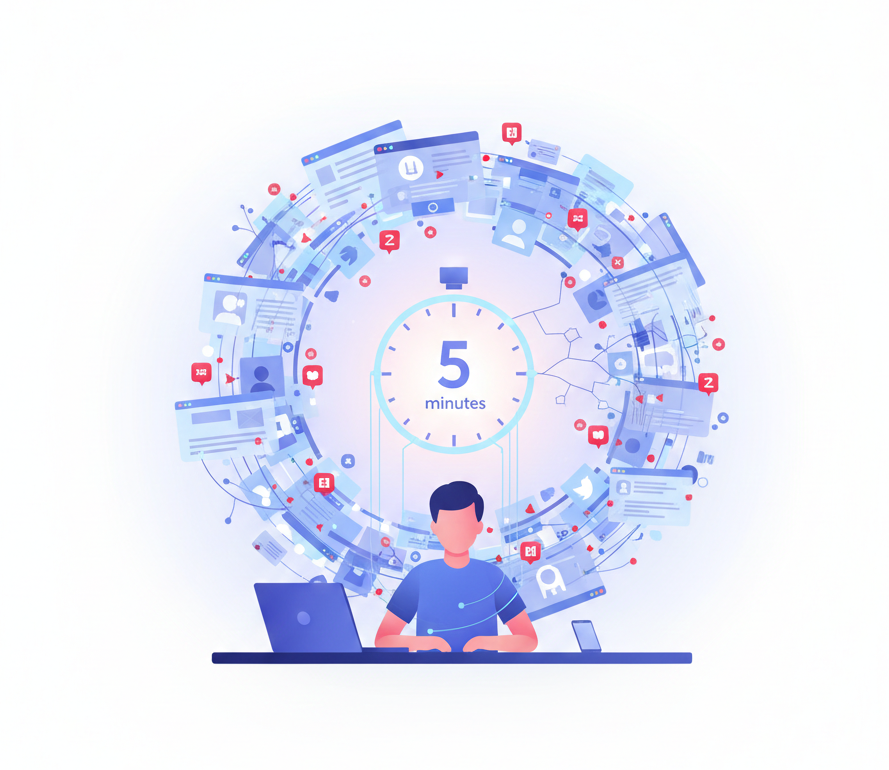
A digital loop is the cycle of scrolling, checking, and reopening apps that keeps your brain in reactive mode instead of focused mode. Research on daily social media habits shows how often people return to their screens without deciding to. Once you’re in the loop, willpower alone rarely gets you out. What works better is a small interruption, a signal that tells your brain the loop is over. Each win below takes about five minutes and gives you a clear stopping point instead of asking you to fight the urge to keep scrolling.
Executing Digital Loop Resets
- Step 1: Do a 5-minute brain dump. Grab paper or open a blank note and write down everything on your mind, tasks, worries, ideas, without editing. Getting it out of your head clears the clutter pulling you back into the loop, and it usually surfaces the one task that matters next.
Why it works: an unfinished thought is a common reason people reach for their phone. - Step 2: Set a 5-minute timer for one micro-task. Pick a single small task, replying to an email or tidying your desktop, and set a timer. Short, bounded blocks build momentum faster than motivation does. If you’re short on ideas, this list of productive things to do covers plenty of five-minute options.
Why it works: finishing something small proves starting was worth it. - Step 3: Switch to airplane mode. Turn it on for five minutes to cut off notifications and remove the instant temptation to check your phone. Without incoming alerts pulling at your attention, it has room to settle on the task in front of you.
Why it works: most of the pull fades within the first minute or two. - Step 4: Take 10 deep breaths. Pause and breathe deeply. This simple reset lowers the dopamine spike constant scrolling creates. For a deeper reset beyond one pause, a full dopamine reset rebuilds your baseline over several days instead of one afternoon.
Why it works: it gives your nervous system a moment to settle before you decide what’s next. - Step 5: Clean one small area of your workspace. Tidy a single drawer, your desk, or one corner of your screen. Physical order creates quick, visible progress, and that small sense of completion carries into your next task.
Why it works: it removes small visual triggers that pull your eyes back to your phone. - Step 6: Drink water and step away from the screen. Stand up, get a glass of water, and give your eyes a short break. This interrupts the habit loop before it takes hold again, and it’s one of the simplest ways to protect mental focus later in the day.
Why it works: the loop depends on staying in the same position with the same thing in front of you. - Step 7: Change your environment, even slightly. Move to a different room, or just a different seat. A small shift in surroundings acts as a fresh-start signal, telling your brain the old pattern has ended.
Why it works: it works even better paired with one of the resets above.
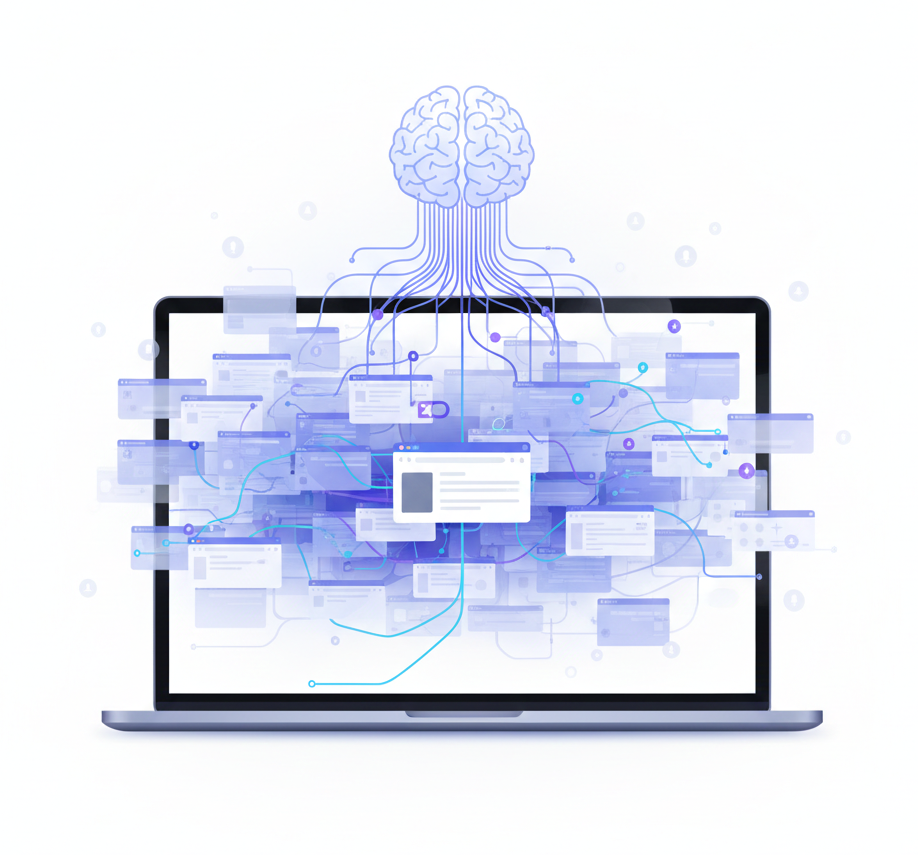
Why 5-Minute Wins Work
Small actions may seem simple, but they create powerful psychological shifts. Here’s why 5-minute wins are so effective:
| Reason | What It Means | Why It Matters | Example |
|---|---|---|---|
| They reduce overwhelm | Big goals feel heavy and hard to start. A 5-minute task feels small and manageable. | When something feels easy, you’re more likely to begin. Starting removes mental resistance. | Instead of “clean the whole room,” tidy one corner for 5 minutes. |
| They rebuild momentum | Small actions create forward movement. | Progress builds confidence. Once you start, continuing feels easier. | Write for 5 minutes. Often, you’ll keep going beyond that. |
| They break dopamine cycles | It trains your brain to feel satisfaction from effort, not just quick digital hits. | It retrains your brain to feel satisfaction from effort, not just quick digital hits. | Do 5 minutes of stretching instead of opening social media. |
Conclusion: Small Resets, Big Control
A full digital detox isn’t necessary to feel back in control. One small interruption, like the steps above, is often enough to break the loop and refocus. If this pattern repeats daily, pairing it with a structured digital wellness approach can help the reset stick beyond a single afternoon.