
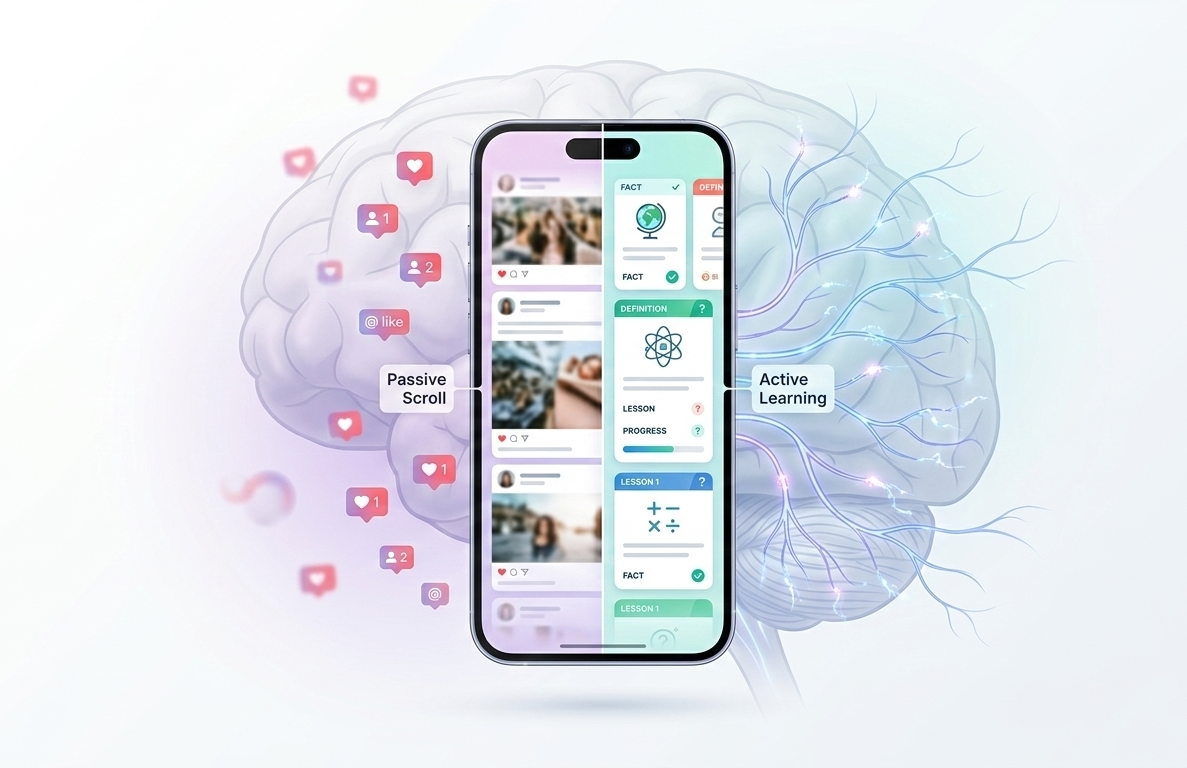
Have you ever picked up your phone to check the time and lost twenty minutes to scrolling? You’re not alone. Micro-learning apps offer a simple fix: short, focused lessons that fit into the same five-minute windows social media usually fills. Instead of an endless feed, you get a quick language drill, a book summary, or a brain-training round, then you put the phone down with something to show for it.
Five minutes works because it matches the exact gap social media is designed to fill: a line at the coffee shop, a few minutes before a meeting, the last stretch of a commute. The apps below aren’t trying to compete with your phone on entertainment value. They’re built to be just as quick to open, so the choice between them and a feed comes down to habit, not willpower.
Below are five apps that make the swap easy, plus a quick comparison so you can pick the one that fits how you actually want to spend those five minutes.
Quick Comparison
| App | Best For | Price | Format |
|---|---|---|---|
| Blinkist | Book summaries | Free trial, paid plans after | Audio and text |
| Duolingo | Language learning | Free, with a paid tier | Gamified lessons |
| Headway | Self-improvement | Free trial, paid plans after | Book summaries |
| Brilliant | Math, science, logic | Free trial, paid plans after | Interactive problems |
| Elevate | Cognitive training | Free, with a paid tier | Short games |
None of these require a big time commitment or a steep learning curve to get started. You can install any of them and be through your first lesson before a single social media notification pulls you back in.
1. Blinkist – Learn Key Ideas from Books in Minutes
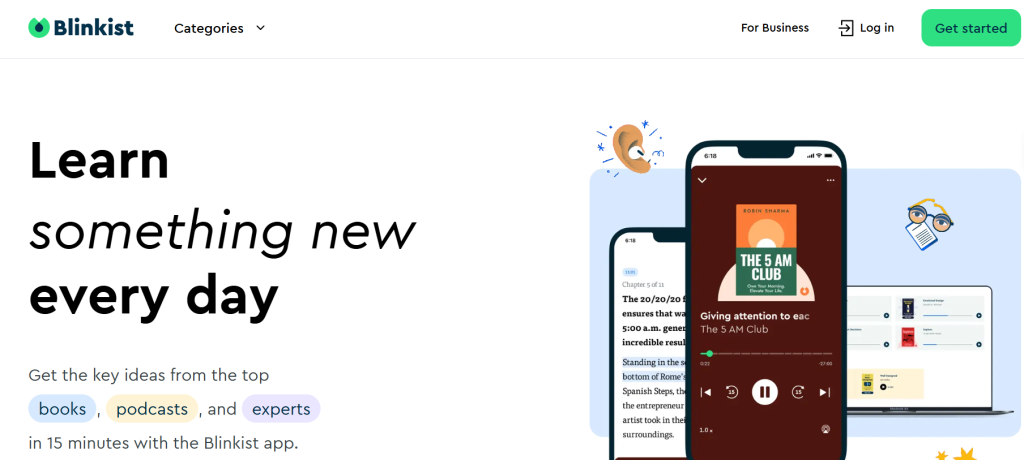
Blinkist turns full nonfiction books into short summaries called “blinks,” covering topics like productivity, psychology, leadership, and finance. Instead of spending six to eight hours on a full book, you get the core ideas in ten to fifteen minutes, which makes it easier to stay current on more books than you’d otherwise have time for.
Both audio and text versions are available for every blink, so you can read one while waiting in line or listen to one during a commute. Many users swap their morning social media scroll for a single Blinkist summary while getting ready for the day, since it takes about the same amount of time and leaves them with an actual idea to think about. If you’re building a reading habit for the whole household, a children’s book publisher is worth a look too, since it covers the younger end of the same idea Blinkist applies to adult nonfiction. ideas from over 300 books in a year, something that would be difficult with traditional reading alone.
2. Duolingo – Turn Spare Minutes into Language Skills
Duolingo turns language learning into a game, with points, levels, and streaks that make short daily sessions feel less like a chore. Each lesson mixes translation, listening, and speaking practice into bursts of three to five minutes, so a single session fits into almost any break in your day.
The streak feature is the real habit driver here. Once you’ve kept one going for a week, most people feel more motivated to protect it than to let it break, even on a day they don’t feel like practicing. That pull to keep a streak alive is often stronger than the pull of one more scroll through a feed. If your language goal is bigger than casual practice, say you’re weighing a move or study program abroad, five minutes is also enough time to check options with a consultancy like Jagvimal Consultants instead of reaching for the feed.!
3. Headway – Bite-Sized Self-Improvement Lessons
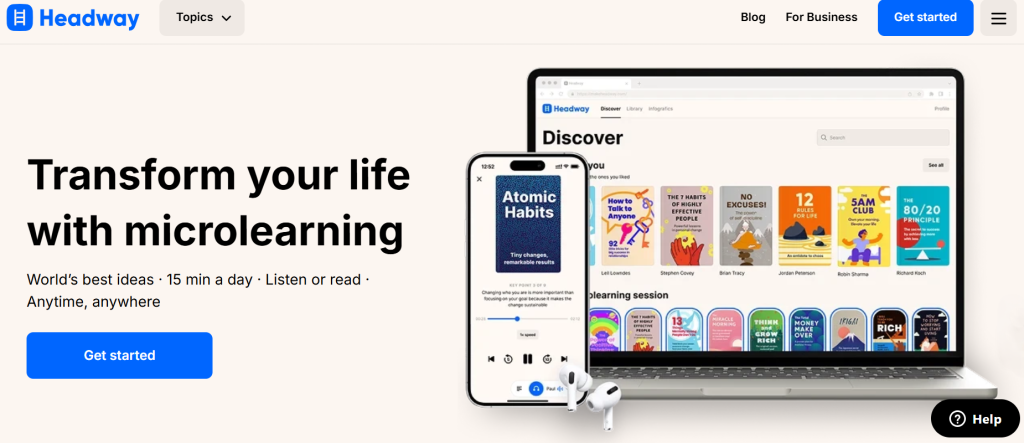
Headway summarizes bestselling books on productivity, leadership, and mental health into short, practical takeaways rather than full recaps. A single summary might focus on one concrete shift, like managing your time better or building a steadier daily routine, using visuals and short quizzes to keep it from feeling like homework.
It works especially well as a first-thing-in-the-morning swap for social media, since a five-minute summary occupies the same slot a scroll session usually takes, but leaves you with one idea you can actually use that day. recipe, or a quick history lesson. By incorporating these apps into your morning routine, you can turn your idle scrolling time into valuable learning opportunities.
4. Brilliant – Learn Concepts Through Interactive Practice
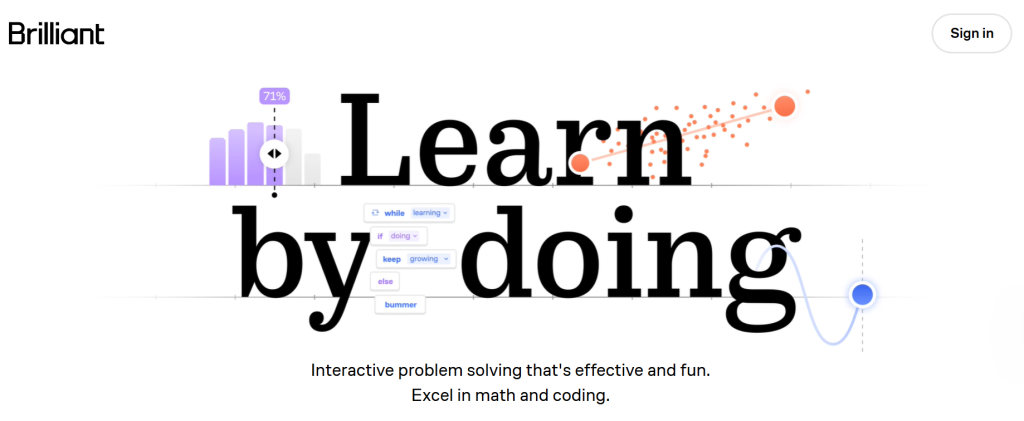
Brilliant focuses on math, science, logic, and computer science, with each lesson broken into small interactive steps instead of long explanations. Rather than reading about a concept, you solve a short problem and see how the idea works as you go, which makes even dense topics like probability or algorithms easier to follow.
This hands-on format makes Brilliant a strong pick if you want your five minutes to sharpen problem-solving specifically, rather than pick up general knowledge. Lessons build on each other, so a short daily habit adds up to real progress on a topic within a few weeks, whether that’s algorithms for their own sake or groundwork for something like working with an app development company down the line.cessible through these micro-learning apps. Say goodbye to mindless scrolling and hello to meaningful knowledge acquisition in just a few minutes a day. Make the switch today and feed your curiosity while enhancing your skills with these innovative learning platforms.
5. Elevate – Train Your Brain in Minutes
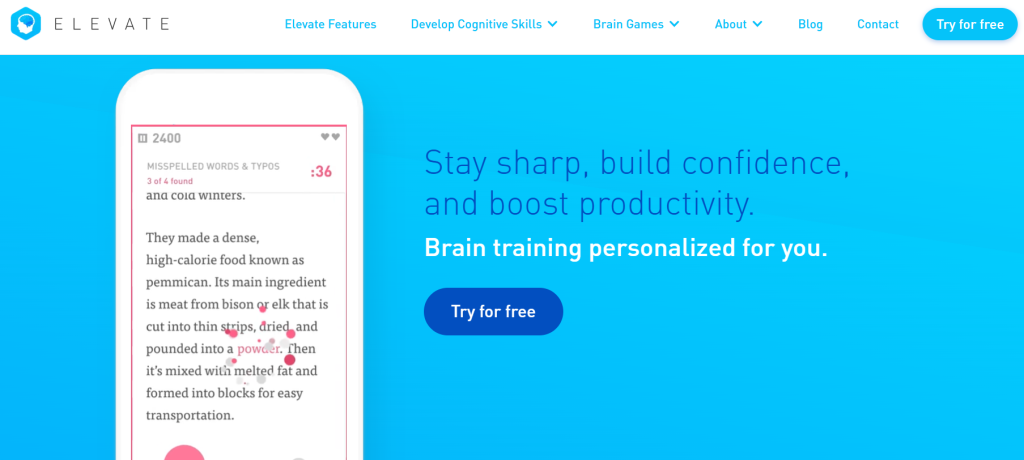
Elevate runs short daily games targeting reading comprehension, vocabulary, memory, and mental math, with a full session taking about five minutes. Each game is quick enough to fill a single break in your day without pulling you away from whatever comes next.
Because every session ends with a clear result, a score, a streak, a small win, it creates a similar quick reward loop to the one that makes social media hard to put down, just pointed at something useful instead. Over time, that shift in what your phone gives you a small hit of progress rather than a feed to refresh can make Elevate a genuine default instead of an afterthought.gradually replace unproductive scrolling with activities that strengthen cognitive skills and encourage mental growth. Even just five minutes of daily brain training can make your phone feel less like a distraction and more like a tool for personal improvement.
How Micro-Learning Can Replace Social Media
Short lessons mimic the quick-scroll experience
One reason social media is so hard to quit is that it perfectly fits the small gaps in our day. Platforms are intentionally designed around the concept of infinite scrolling, which keeps users engaged with endless content. Whether you’re waiting for a meeting to start, sitting in traffic, or taking a quick break, opening a social media app provides instant content in just a few seconds. Micro-learning apps are designed in a very similar way. Instead of long lessons or complicated courses, they offer short learning sessions that take only a few minutes. These quick lessons fit naturally into the same time slots that social media usually occupies.
For example, instead of watching several short videos or scrolling through endless posts, you might explore your study abroad options through expert platforms like Jagvimal Consultants, complete a quick language exercise, read a book summary, or solve a short puzzle. The interaction feels similar to scrolling because the content is brief and engaging, but the outcome is much more meaningful. Over time, this simple substitution can significantly reduce the amount of time spent on mindless scrolling.
Creates a positive dopamine loop
Social media platforms are designed to trigger dopamine, the brain’s reward chemical. Every new post, notification, or video gives a small burst of excitement, encouraging users to keep scrolling. This constant stream of content also highlights the importance of creating videos that capture attention quickly, which is a key focus of Burnwe video marketing. Micro-learning apps can create a similar reward loop, but with more productive outcomes. Completing a short lesson instead of watching random videos can gradually reduce the habit of doomscrolling.
These small achievements release the same motivational feeling that keeps users engaged, but instead of consuming random content, you’re actively learning something new. As this positive feedback loop builds, the brain begins to associate short phone sessions with progress and learning rather than passive entertainment.
Builds knowledge gradually
If you want to enrich your mind while replacing mindless scrolling, micro-learning apps are the way to go. These apps offer bite-sized knowledge chunks that build up gradually over time. By using the concept of spaced repetition, they ensure information retention and long-term learning.
Instead of endless social media feeds, consider integrating micro-learning apps into your daily routine. These apps provide quick lessons on various topics like mobile app development, allowing you to expand your knowledge effortlessly. With just a few minutes a day, you can develop new skills and broaden your understanding in a way that fits perfectly into your schedule. Mobile app development skills can help you understand how modern apps are designed, built, and optimized for better user experiences.
Tips to Actually Replace the Scrolling Habit
Keep one learning app on your home screen
One of the easiest ways to change a habit is to make the new behavior more visible and convenient. Similarly, a digital marketing company focuses on optimizing user journeys to drive better engagement and conversions. SEO can also improve online visibility by helping users discover valuable content through search engines. If your goal is to reduce social media usage, placing a learning app directly on your phone’s home screen can make a significant difference.
When you unlock your phone, the apps you see first usually determine what you open. If social media apps are front and center, it becomes almost automatic to tap on them. By placing a micro-learning app in that same position, you give yourself a simple alternative whenever you reach for your phone.
Some people also move social media apps into folders or onto a secondary screen. This small barrier forces a moment of awareness before opening them. During that pause, it becomes easier to choose the learning app instead and spend a few minutes on something productive.
Start with 5-minute sessions
Trying to completely replace your scrolling habit overnight can feel overwhelming. Instead of forcing a drastic change, it’s more effective to start with very small steps. Begin by setting aside just five minutes for micro-learning whenever you feel the urge to scroll. In those five minutes, you might complete a quick language lesson, read a short book summary, or solve a short brain-training exercise.
Because the commitment is so small, it doesn’t feel like a burden. Over time, short daily lessons build knowledge gradually. Techniques such as spaced repetition help strengthen long-term memory through repeated exposure to information. The key is consistency. Even a few minutes each day can gradually shift your behavior away from mindless scrolling.
Set a daily learning streak
Many micro-learning apps include streak features that track how many consecutive days you complete a lesson. This simple feature can be surprisingly powerful for building habits. These streaks encourage consistency and tap into the psychology of motivation by rewarding daily progress. After maintaining a streak for several days, most people feel motivated to continue it rather than break the chain. Even on busy days, they might complete a quick lesson just to keep the streak going.
Over time, this small daily action turns learning into a routine rather than an occasional activity. Instead of automatically opening social media during idle moments, you begin to associate your phone with quick learning sessions. This shift helps transform your screen time into something more productive while still keeping the convenience and accessibility that smartphones provide.
FAQs
Micro-learning is a learning method that delivers information in small, quick lessons that usually take only a few minutes to complete.
Can micro-learning really replace social media?
It may not replace it completely, but it can reduce mindless scrolling by filling short breaks with quick learning sessions.
Even 5-10 minutes a day is enough to build a consistent learning habit over time.
Most micro-learning apps offer free versions with limited features, while premium plans unlock full content and additional tools.